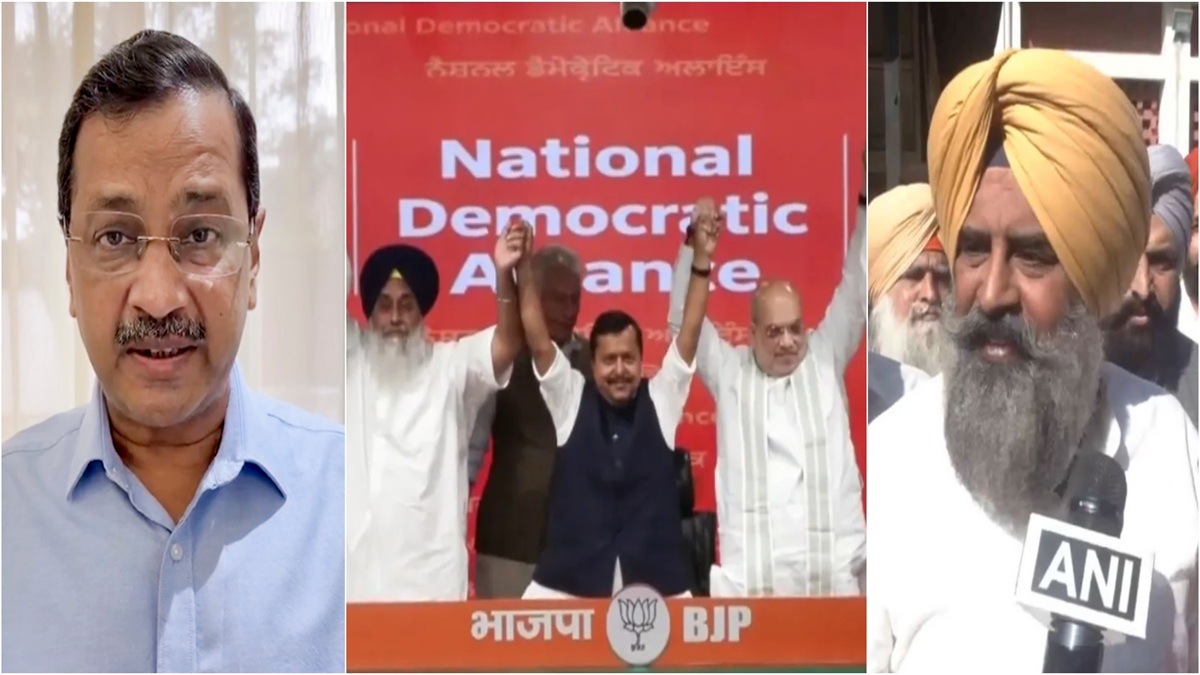
The revival of the BJP-SAD alliance ahead of the 2027 Punjab Assembly elections has drawn sharp criticism from the AAP and Congress, who questioned the timing and motives behind the reunion and brought the farm laws and the 2020-21 farmers' protest back into political debate. The two parties announced the decision on Tuesday, ending a separation that began in September 2020 and restoring an alliance that governed Punjab together from 2007 to 2017.
AAP national convenor Arvind Kejriwal accused the BJP of repeatedly changing partners in pursuit of power, saying the two parties had seen several break-ups and reunions, while asserting that his party's commitment was to the people of Punjab. He defended the Bhagwant Mann-led government's record and said voters would judge parties on their performance. Kejriwal also recalled the farmers' agitation against the Centre's three farm laws and alleged that people had not forgotten the deaths of more than 700 farmers during the protests. He raised the issue of sacrilege incidents reported during the SAD government's tenure and accused the previous regime of allowing the drug problem to grow. AAP MLA Jarnail Singh dismissed the alliance's electoral significance, comparing the two parties to two zeroes that would still add up to zero.
Congress MP and Punjab party leader Amrinder Singh Raja Warring said the announcement was expected and alleged that SAD leaders had misled people by projecting themselves as opponents of the BJP while continuing to support it on important legislative matters. Congress MLA and former minister Bharat Bhushan Ashu termed the reunion a political exercise long in the making and asserted that the Congress would defeat both parties in the next Assembly elections.
Congress MLA Sukhpal Singh Khaira questioned the rationale behind the renewed partnership, arguing it could invite public resentment rather than strengthen the BJP and SAD electorally. He noted that the parties had separated in 2020-21 amid widespread opposition to the three farm laws and said those circumstances could continue to influence voters.