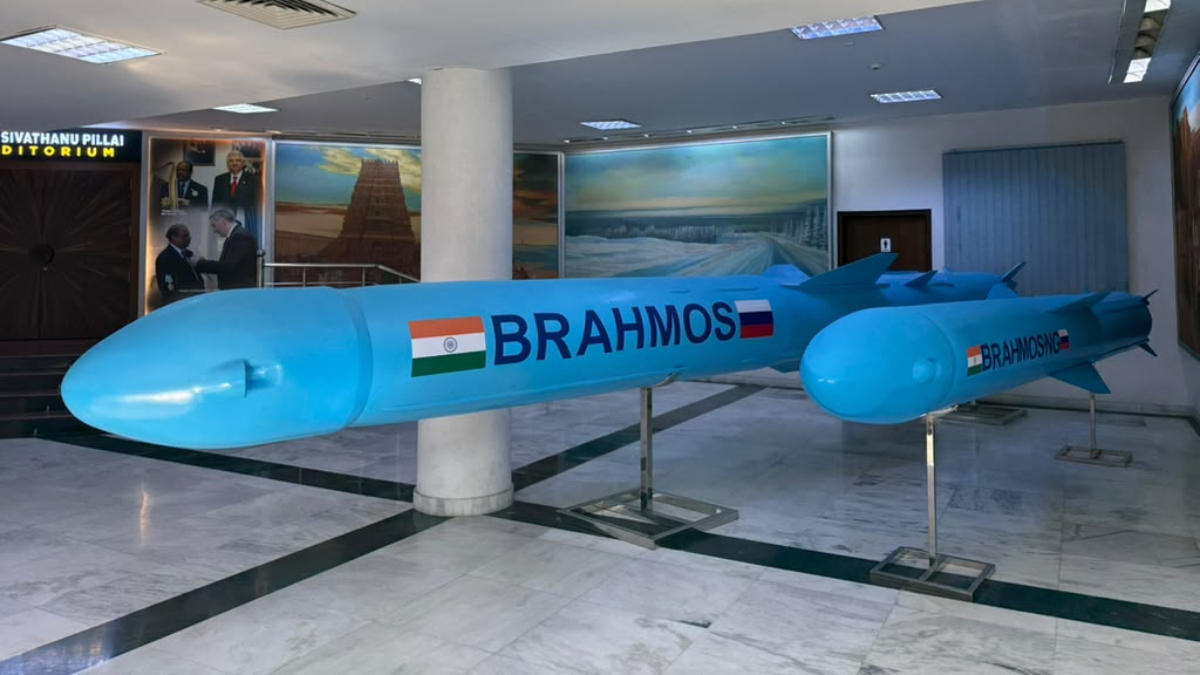
India's BrahMos supersonic cruise missile has drawn renewed attention after its reported use during Operation Sindoor, and focus is now shifting to the next-generation BrahMos-NG variant. In an exclusive interview, BrahMos Director General Dr Jaiterath R Joshi said the missile was deployed in a real-time combat environment for the first time during the operation, and claimed that Pakistan's air defence systems could not detect a single BrahMos. He said the air-launched version, fired from the Indian Air Force's Su-30MKI fighters, played a major role in the strikes.
Joshi described BrahMos-NG as a sleeker, more compact missile built with advanced composite technologies that is expected to be around 60 per cent lighter than the existing version, though final specifications are still being evaluated. He said the programme remains at the design and analysis stage, with the lethality unchanged even as the size is reduced. The smaller design is expected to allow integration onto fighter aircraft wings, with a jet potentially carrying two to four missiles depending on configuration and operational requirements.
On range, Joshi confirmed that a range-extension programme is already underway. He said the original BrahMos had a range of 290 kilometres, while the development effort is focused on extending its reach. BrahMos, inducted into the Army, Navy and Air Force in land-based, ship-based and air-launched variants, is designed for precision strikes against land and maritime targets, and Joshi said its speed makes interception difficult for enemy air defences.