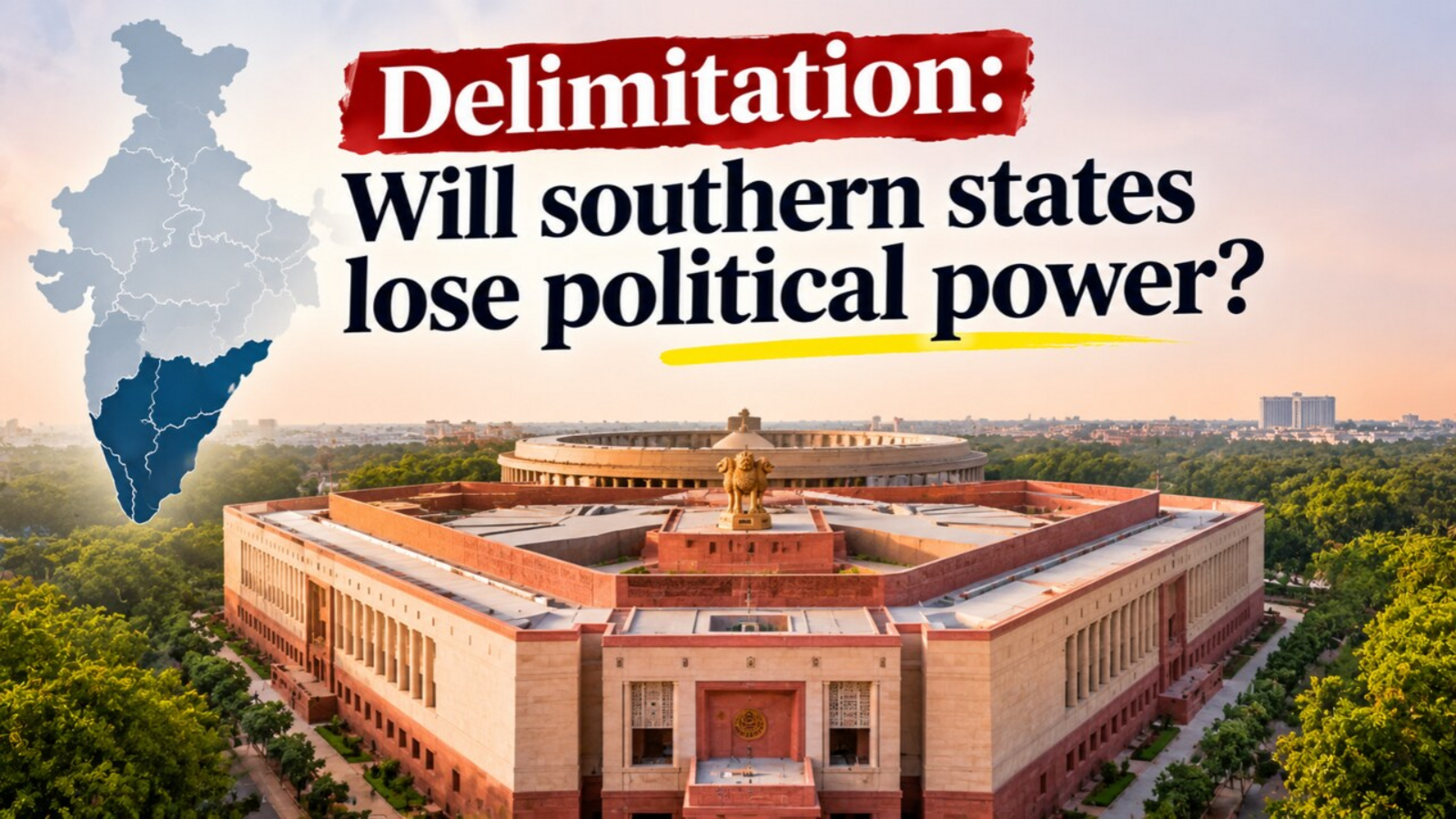
The Union Cabinet on Friday approved a proposal to raise the strength of the Lok Sabha by 50% across all states, while keeping their existing relative share of parliamentary seats unchanged until the first Census conducted after 2051, according to reports. The decision comes ahead of a special sitting of Parliament called by the government from November 30 to December 3, during which legislation linked to delimitation and the implementation of 33% reservation for women in the Lok Sabha and state legislative assemblies from 2029 is expected to be taken up.
The government has said the uniform expansion will preserve each state's existing share of seats. The revised proposal also seeks to use the 2011 Census as the basis for redrawing constituency boundaries, while keeping the inter-state allocation of seats unchanged until the first Census after 2051, according to reports. The proposal is intended to address concerns, particularly among southern states, that a population-based delimitation exercise could reduce their share of representation in Parliament.
The Opposition has questioned the timing and intent of the special sitting, alleging that the government is using women's reservation as a route to push through delimitation. Congress leaders have demanded that the existing strength of the Lok Sabha and the proportion of seats allocated to states be protected, while other Opposition parties have raised concerns about the numerical gap between northern and southern states, the redrawing of constituency boundaries and the functioning of a larger Parliament.
Under the proposed formula, every state and Union Territory would receive a uniform 50% increase over its existing Lok Sabha seats. Applied to the current strength of 543 seats, this would take the Lok Sabha to approximately 815 members, while the proposed constitutional amendment provides for a maximum strength of 850 members. The five southern states of Andhra Pradesh, Telangana, Karnataka, Kerala and Tamil Nadu together hold 129 seats, or 23.76% of the current strength; their projected combined strength would rise to 193.5 seats. The proposed legislation does not specify a rounding formula, so final state-wise numbers will depend on the legal allocation process.