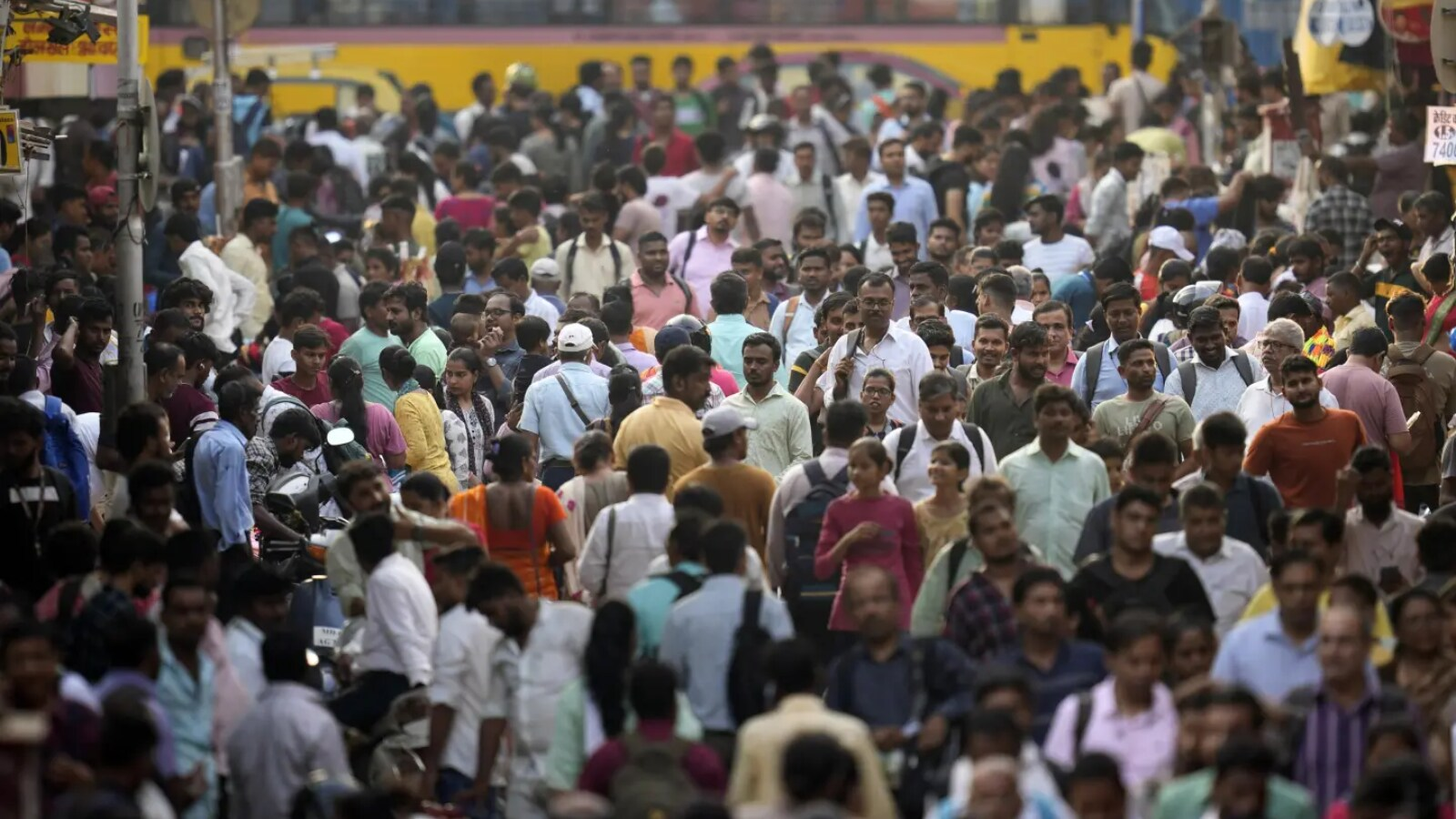
The Union Cabinet on Friday approved the Constitution (132nd Amendment) Bill, 2026, which seeks to enable delimitation to implement women's reservation in Parliament and state legislative assemblies. The move comes three years after the Constitution (106th Amendment) Act, 2023, which provided for one-third reservation for women in the Lok Sabha and state assemblies. The rollout of that law is linked to a delimitation exercise following a Census.
Under delimitation, constituency boundaries are redrawn and seats are allocated among states and Union territories based on population. Article 81 of the Constitution provides for the principle of "one person, one vote, one value", seeking an equal ratio between a state's population and its Lok Sabha seats, with an exception for states whose population does not exceed six million. Article 82 provides for readjustment of seats and division of states into territorial constituencies after every Census.
India's first delimitation exercise was carried out in 1952 based on the 1951 Census, and four commissions were constituted in 1952, 1963, 1973 and 2002. The 29-year gap between the last two followed the Constitution (42nd Amendment) Act, 1976, which froze seat allocation among states based on the 1971 Census until figures from the first Census after 2000 were published. According to an earlier report citing former chief election commissioner SY Quraishi, the freeze was intended to ensure states that performed well in family planning did not lose proportional representation.
In 2002, under the Atal Bihari Vajpayee-led government, delimitation resumed, but boundaries within states and Union territories were redrawn without changing the number of Lok Sabha seats allotted to each. The commission headed by retired Supreme Court judge Justice Kuldip Singh completed its exercise in 2008. The Constitution (84th Amendment) Act, 2001, extended the freeze until publication of figures from the first Census after 2026, and the Constitution (87th Amendment) Act, 2003, allowed use of the 2001 Census for redrawing boundaries. Southern states have argued that fresh population-based allocation could reduce their relative share, as states such as Uttar Pradesh and Bihar recorded higher population growth; the latest proposal seeks to retain the existing proportional share of states.