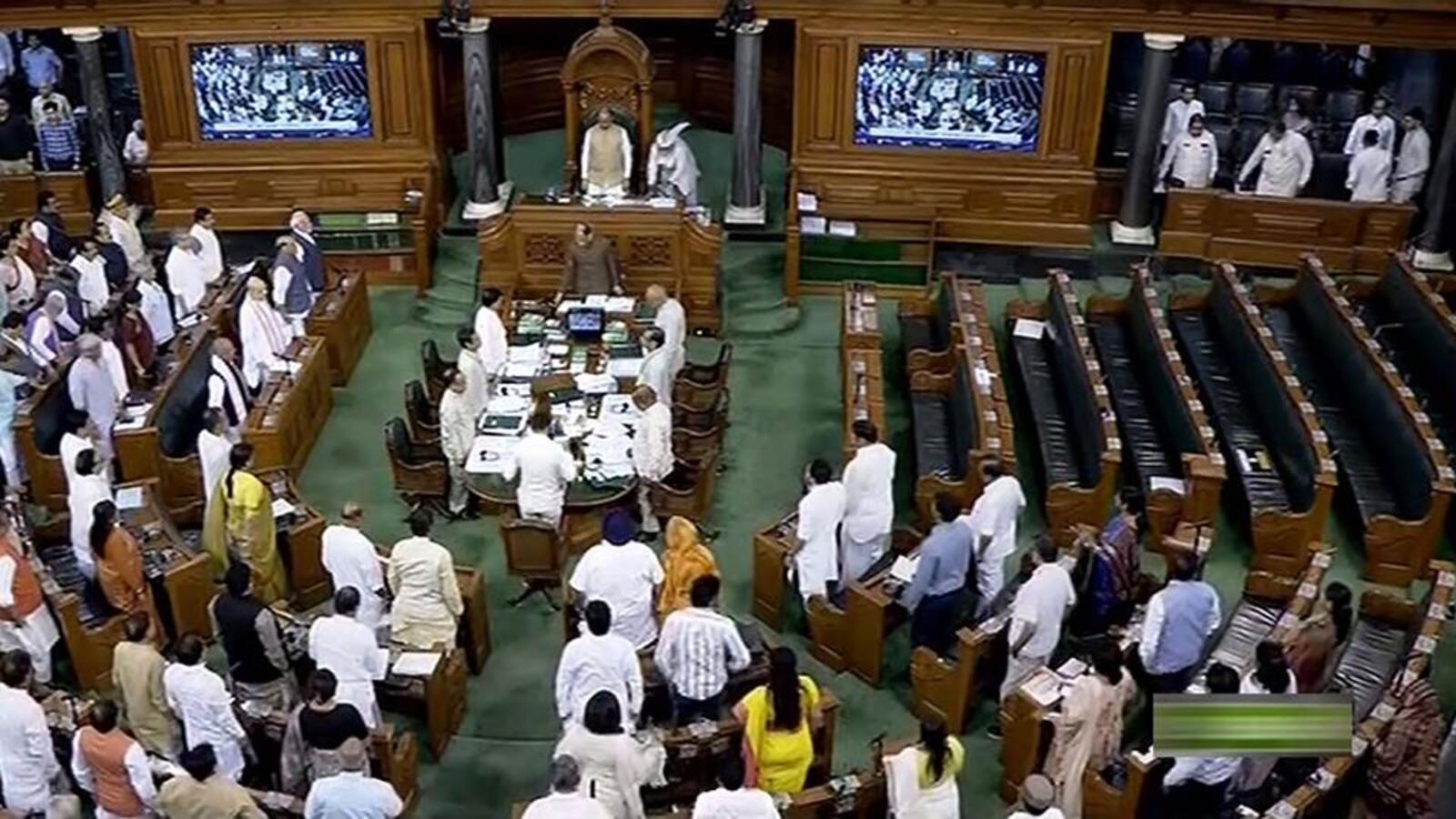
The Union Cabinet is likely to meet on Friday to approve changes to the Constitution (131st Amendment) Bill and the Delimitation Bill, with Parliament set to reconvene on Monday (Lok Sabha) and Wednesday (Rajya Sabha). The bills seek 33% reservation for women in the Lok Sabha and state assemblies before the 2029 general election, which requires fresh delimitation and raising the Lok Sabha's strength from 550 to 850, with up to 815 seats for states and 35 for Union Territories. The Rajya Sabha ceiling of 250 remains unchanged. The Delimitation Bill would base the exercise on the latest census, in practice the 2011 census, and the Delimitation Commission would be headed by a serving or retired Supreme Court judge, with the Chief Election Commissioner or their nominee and the state election commissioner concerned as members.
Southern states have objected most strongly, as slower population growth would shrink their parliamentary weight under a purely population-based formula. The fix under discussion is a "flat 50%" formula, under which every state's seats would rise by half while present proportions stay the same. In April, this was only a spoken promise from Union Home Minister Amit Shah, backed by a "guarantee" from Prime Minister Narendra Modi, and was not part of the bill. The government is now considering raising seats by up to 50% in every state while keeping inter-state proportions based on the 1971 Census, though no final decision has been taken. Law and Justice Ministry (Legislative Department) officials said the revised draft may also restore the 1971 Census as the basis for dividing seats among states, a reference the April bill removed. The April version carried no state-wise seat numbers or formula, a gap the Opposition repeatedly flagged; whether the new draft fixes this will be clear only after the Cabinet meets.
On April 17, the amendment bill received 298 votes in favour and 230 against. It needed 352, two-thirds of the 528 members present and voting, and fell 54 short. It was the first Modi government bill to be defeated, and the government withdrew the two bills.
The Lok Sabha picture has shifted since April. In June, 20 of the Trinamool Congress's 28 Lok Sabha members broke away and merged with the Nationalist Citizens Party of India, which supports the ruling National Democratic Alliance. In July, Speaker Om Birla approved the merger of six Shiv Sena (UBT) MPs with the Eknath Shinde-led Shiv Sena, an NDA partner. The Shiromani Akali Dal, which walked out of the NDA in 2020 over the farm laws, has announced its support for the Delimitation Bill and the women's reservation law. The NDA now has about 320 members in the Lok Sabha; with three seats vacant, the House has 540 members, and the bill needs 360 votes for passage if every member votes.
On its own, the NDA is about 40 votes short. The Sharad Pawar-led Nationalist Congress Party – Sharadchandra Pawar, with eight members, could take it to about 328; leader Supriya Sule has said her party is open to backing the bill if every state gets a flat 50% increase with no state-wise tweaks, but she wants to see the full bill first. The Dravida Munnetra Kazhagam, with 22 members, left the Opposition bloc in May after the Congress tied up with the ruling Tamilaga Vettri Kazhagam in Tamil Nadu, and is expected to decide only after seeing the draft and receiving written assurances on its demands. Even with the DMK, the NDA would reach only about 350, still about 10 short.
The remaining votes would have to come from the 15 other members outside both alliances, including the YSRCP (four), AAP (three), Amritpal Singh's Akali Dal (Waris Punjab De) with two, and one each from the AIMIM, Chandrashekhar Azad's party, the United People's Party Liberal, the Zoram People's Movement, Engineer Rashid's party, and an independent. The YSRCP has often sided with the government on key bills, while AAP and the AIMIM are unlikely to support. Even if the YSRCP and a few smaller members joined in, the NDA would reach only about 355-357. That is where attendance becomes crucial: the two-thirds rule counts only those present, so if just five or six opposition members are absent, a tally of about 357 would be enough.