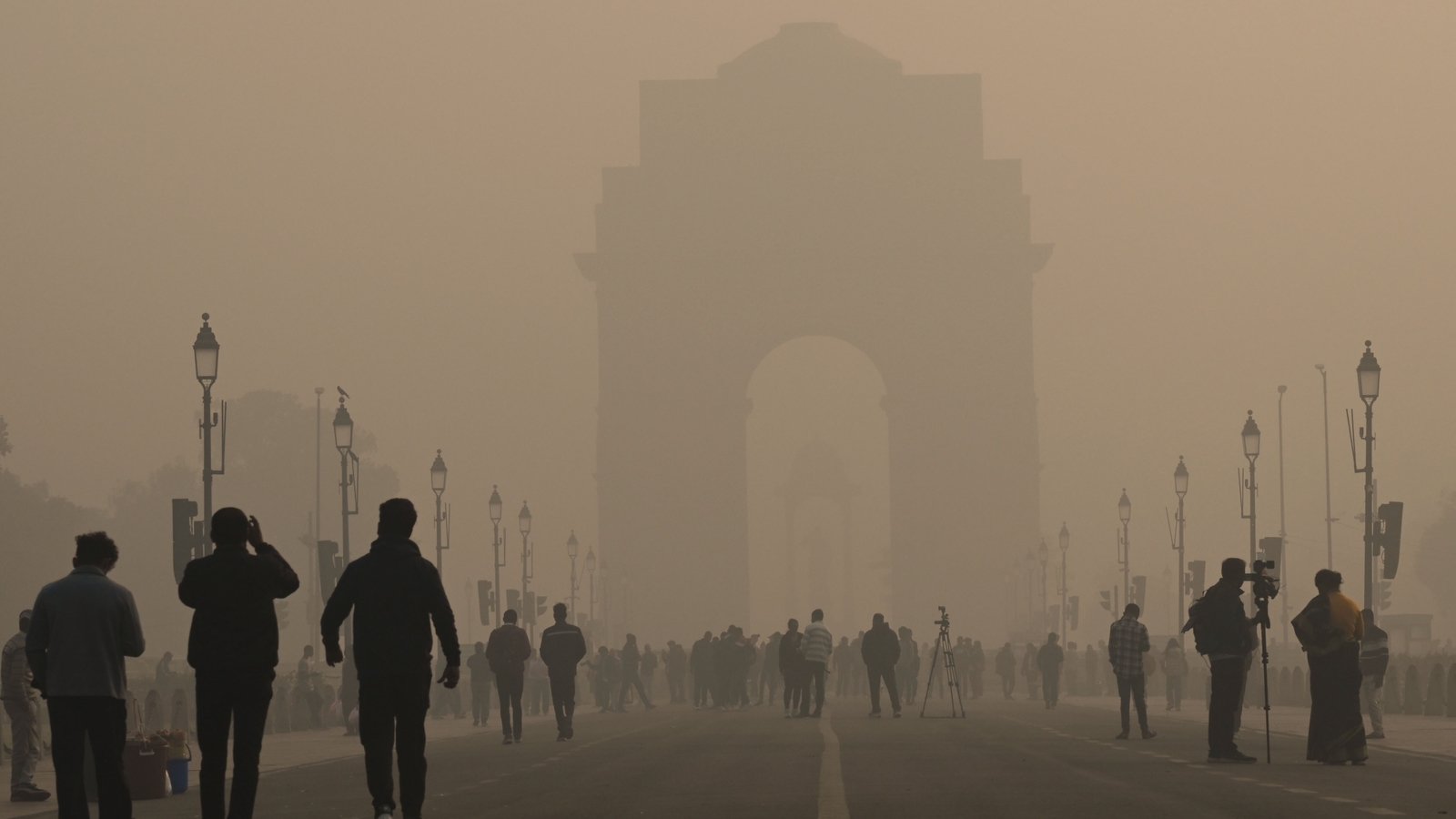
Delhi's official air quality index may be understating how bad the air is on the most polluted days, according to an analysis of CPCB documents and city figures. The Central Pollution Control Board seemingly does not follow the index's own published definition when calculating it, the analysis found.
Applying the index's definition, set out in at least four CPCB and government documents, to a year of hourly readings from Delhi's government monitoring stations, the city would have been rated "severe" on 23 days, more than double the 10 reported in CPCB's daily 4pm bulletins. The gap is starkest on the worst days. This November, the analysis showed Delhi's air would have been "severe" on two days — Diwali, November 8, and the day after — while CPCB's bulletins called both "very poor" and have yet to declare a single "severe" day this month. No November since at least 2015 has gone without one, according to the analysis of the bulletins. On November 9, the index should have been 411 instead of the 344 CPCB published. On the same day, CPCB rated just one monitoring station "severe", where 29 would have qualified under the definition.
The index's definition requires each pollutant's readings to be averaged over 24 hours, with that average converted into a sub-index and the highest sub-index becoming the station's AQI. CPCB's own website note, its AQI calculator, its November 10 clarification and the 2014 IIT Kanpur report that set up the index all describe this method, the analysis found. CPCB's published figures for more than 500 stations elsewhere in India are averaged from hourly scores in the same way, it added.
CPCB's practice makes cleaner days look slightly worse than they were, by less than 10 points, and ranked Delhi in a worse category than it would have been in on only two days in the year, according to the analysis. The error is far larger, and runs the other way, on the most polluted days.