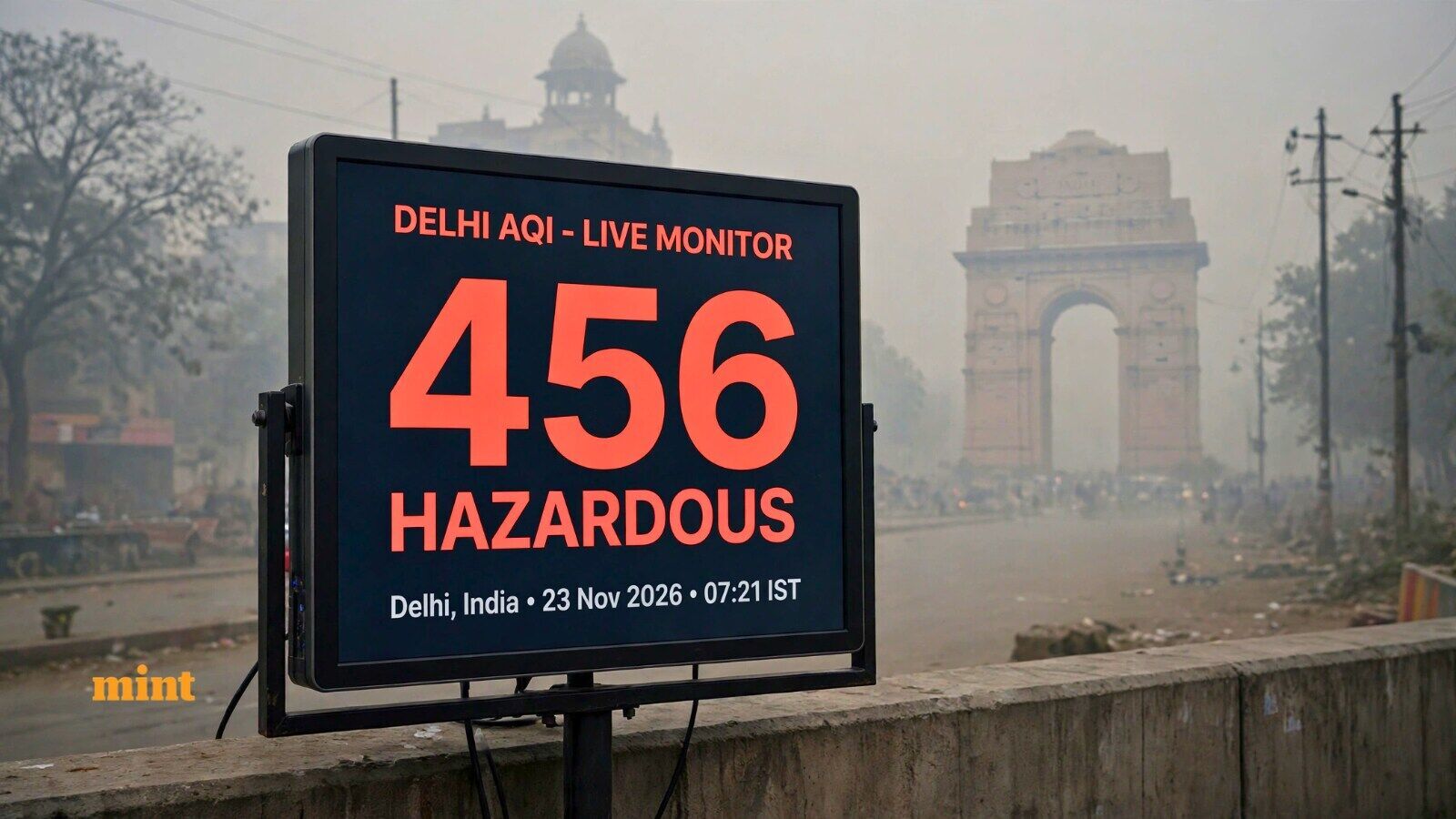
Delhi recorded hazardous air quality on Monday, November 23, with the AQI reaching 456, according to live monitoring data at 7:21 AM. PM2.5 concentration stood at 303 micrograms per cubic metre, 20.2 times the WHO guideline, while PM10 was 425 micrograms per cubic metre, about 9.4 times the limit. The platform classified both as unsafe and ranked Delhi 15th among the world's most polluted cities at that moment.
The city's pollution has fluctuated through November. The AQI was 306 on November 1 and 461 on November 6, peaked at 666 on November 9, fell to 284 on November 15, then rose to 406 on November 16 and 224 the next day. It climbed to 353 on November 19 and 341 on November 20, stood at 280 on November 22, and rose sharply on Monday.
Other pollutants showed a mixed picture: carbon monoxide at 1,045 parts per billion, sulphur dioxide at four, ozone at three and nitrogen dioxide at 18. Weather offered little relief, with the temperature at 16 degrees Celsius, smoky haze, 59% humidity and wind speed of 7.6 kilometres per hour.
The monitoring platform compared the exposure to smoking about 9.5 cigarettes daily, assuming continuous exposure to average PM2.5 levels over 24 hours, and recommended staying indoors, using air purifiers and wearing N95 masks. Delhi's air was far worse than other metros: Mumbai 207, Pune 190, Bengaluru 184, Chennai 176, Ahmedabad 171, Hyderabad 165 and Kolkata 102.