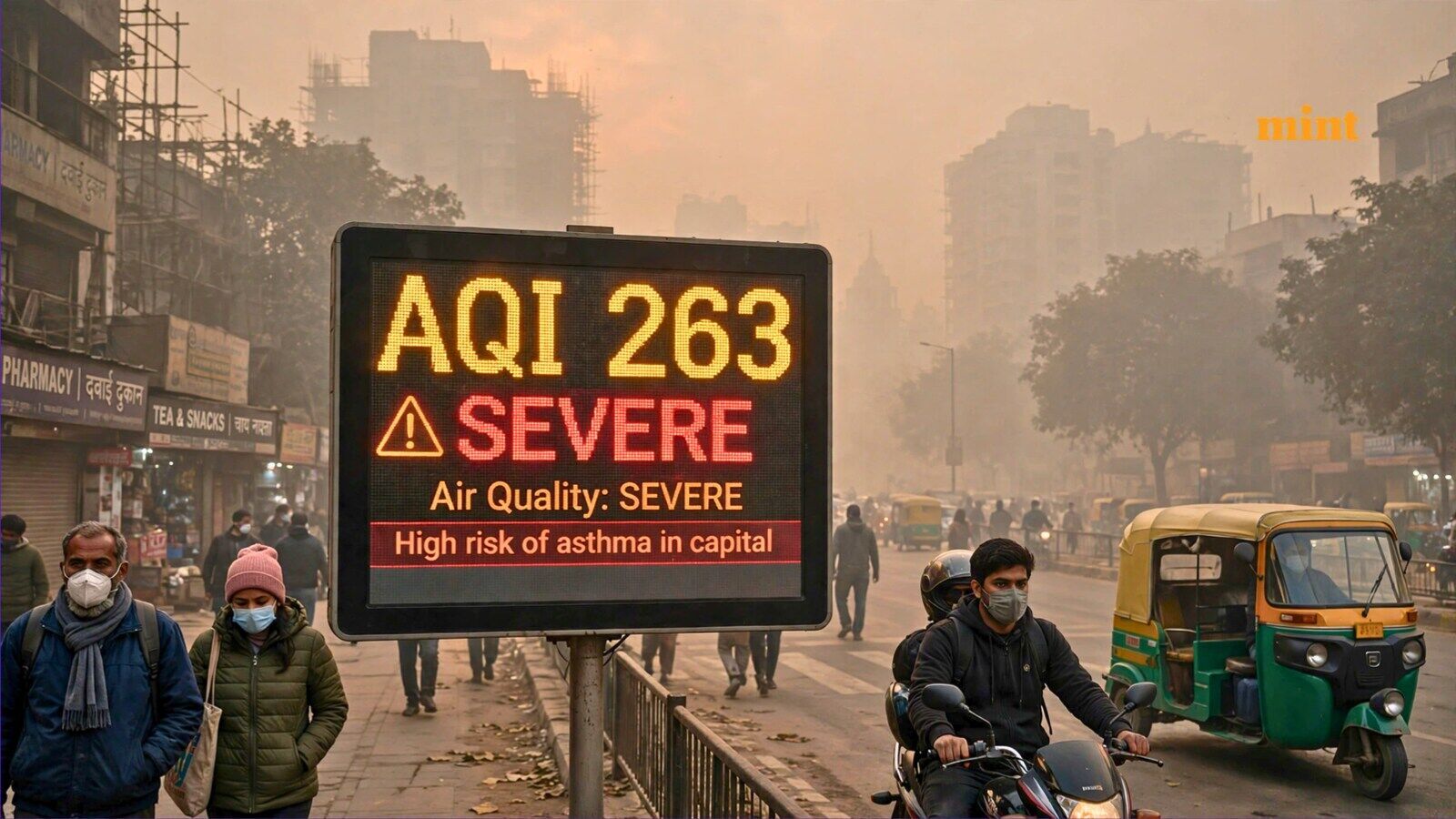
Delhi woke to a smoky haze on Thursday, November 26, as air quality slipped into the severe category. The Air Quality Index stood at 263 at 8:41 AM on the US scale, down 71 points from an overnight peak of 334 recorded at 3:31 AM. New Delhi ranked 60th among the world's most polluted cities at that time.
The city's air had improved through Wednesday afternoon, with the AQI falling to 165 at 5:01 PM, its lowest in the previous 24 hours, before worsening again in the evening and crossing 300 before midnight. Readings stayed above 300 until after 5 AM before easing. Wednesday's daily reading was 226, down from 236 on Tuesday, while Monday stood at 311. The highest daily figure through November 25 was 666 on November 9, followed by 547 on November 12.
At 8:41 AM, the citywide PM10 level was 261 micrograms per cubic metre, about 5.8 times the World Health Organization's guideline of 45, and fell in the unhealthy category. PM2.5 concentration was 186 micrograms per cubic metre. Carbon monoxide stood at 2,214 parts per billion, nitrogen dioxide at 20, sulphur dioxide at six and ozone at one. The temperature was 17°C with 48% humidity, wind speed of 5.4 km/h and a UV index of 0.5.
Among eight Indian metros, New Delhi recorded the highest AQI, followed by Kolkata at 256, Pune at 198, Mumbai at 185, Ahmedabad at 175, Chennai at 125, Hyderabad at 92 and Bengaluru at 71. AQI.in flagged a high risk of asthma symptoms at the reported pollution level, listing wheezing, breathlessness, chest tightness and persistent cough, and advised people with asthma to stay indoors with windows closed, avoid strenuous outdoor activity and limit exposure to secondhand smoke.