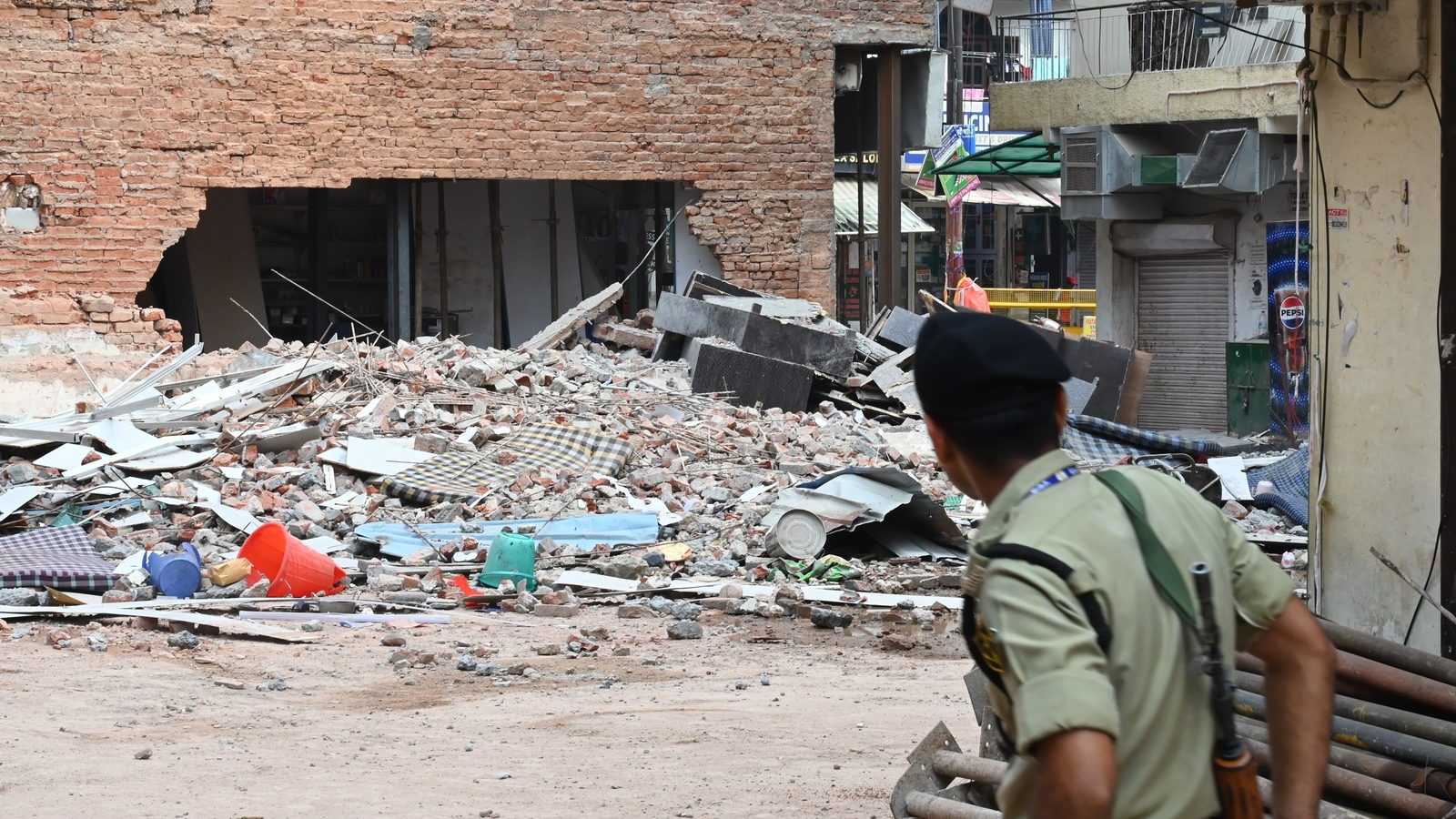
The Municipal Corporation of Delhi has told the Union home ministry that a door-to-door structural and fire safety survey of all buildings in the capital will require at least four million man-hours, senior municipal officials said. The home ministry directed the MCD last month to prepare a roadmap for a citywide audit of fire and structural safety covering every house and building, including those in authorised and unauthorised localities, following a series of building collapses and fires in Delhi.
An official said Delhi has more than 40 lakh building structures, and assessing even one house an hour would mean 40 lakh working hours, or 5,00,000 working days. With 500 workers deployed, the exercise would take around 1,000 days, and the duration would fall proportionately if more people were engaged. The report on the time and resources needed has been sent to the central government, which officials said must decide whether the survey is required and what timeline to follow. The proposed exercise would involve filling out a survey form with details such as the age of the building, covered area, visible structural deficiencies and the absence of a fire NOC or building plan, and data from it could later inform policy.
Officials said a scientific structural audit would be costlier, ranging from Rs1-5 lakh depending on a building's area, and that civic agencies lack the capacity to inspect millions of buildings. The MCD's current annual dangerous-building survey covers around 3.25 million buildings and relies largely on visual inspections to flag signs such as cracks and leaning walls. The corporation has no dedicated structural safety audit unit and no permanent structural engineers, relying instead on 249 empanelled third-party structural engineers; if all four million buildings estimated by the MCD were audited, each engineer would have to assess more than 16,000 buildings, a figure that would rise substantially if the exercise covered all 7.6 million census houses. The home ministry is expected to decide whether the MCD should hire a third-party agency or use architects already empanelled with civic bodies.
In June 2020, the three erstwhile municipal corporations set a six-month deadline to obtain structural safety certificates for high-risk buildings and older structures predating the incorporation of seismic provisions in Delhi's building bye-laws after the Delhi high court's intervention, but officials said the exercise could barely cover a few thousand buildings even after six years. The Tejendra Khanna Committee, set up in 2006 to examine unauthorised construction and misuse of premises, estimated that 70-80% of structures had violated building norms. Delhi falls under Seismic Zone IV, classified as having a high earthquake risk, and officials said any eventual audit would need to prioritise high-rise buildings, large assembly buildings, government offices, older properties and other vulnerable structures.