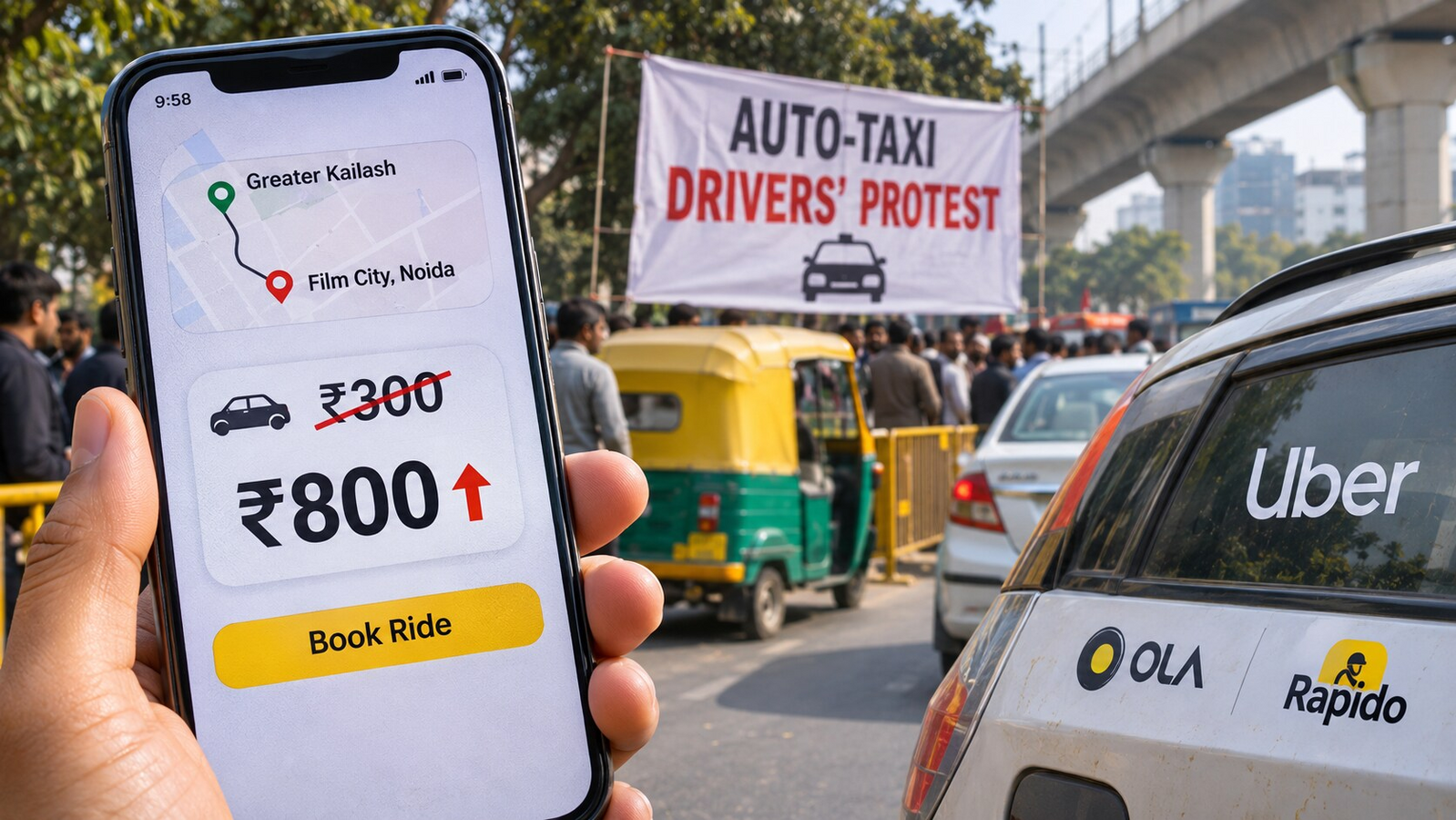
Cab fares across Delhi-NCR rose sharply on Thursday morning as transport unions held a protest at Ramlila Maidan, demanding higher auto and taxi fares, a ban on private bike-taxi services and the withdrawal of certain fitness-related requirements for auto-rickshaws. The protest, organised by unions affiliated with the Bharatiya Mazdoor Sangh, coincided with peak office hours, leaving commuters paying significantly more for daily journeys.
A ride from Greater Kailash in South Delhi to Film City in Noida, usually around ₹300 on platforms such as Ola and Rapido, was showing fares above ₹400 at around 9 am and crossed ₹500 by about 10 am, according to reports. One passenger reportedly paid ₹800 for the same journey. A South Delhi homemaker said that a roughly 3-km auto ride was priced at ₹90-92 on Uber against the usual ₹75-80, and that an hourly cab rental had climbed to ₹406 from ₹325. She also said a driver refused the app-displayed fare of ₹190 for a round trip and demanded ₹300 instead.
Drivers said longer journeys were becoming unviable. Anupam Kumar, who drives on Ola and Rapido, said drivers receive a fixed payment of around ₹104-114 for the first 3 km, with per-kilometre earnings declining across distance brackets, leaving little margin on 30-35 km trips. He also said Ola adjusts fares for time spent in traffic while Rapido does not.
Kumar said unions in Ambala, Chandigarh and parts of Haryana outside Gurugram had strictly enforced the strike, with members checking vehicles arriving from Delhi-NCR. Drivers found using cab-hailing applications were allegedly having their phones seized. One driver questioned why the government could ban TikTok but not Ola, Uber and Rapido, arguing that banning such platforms would help alternatives like Bharat Taxi gain traction; he is registered on all four platforms.