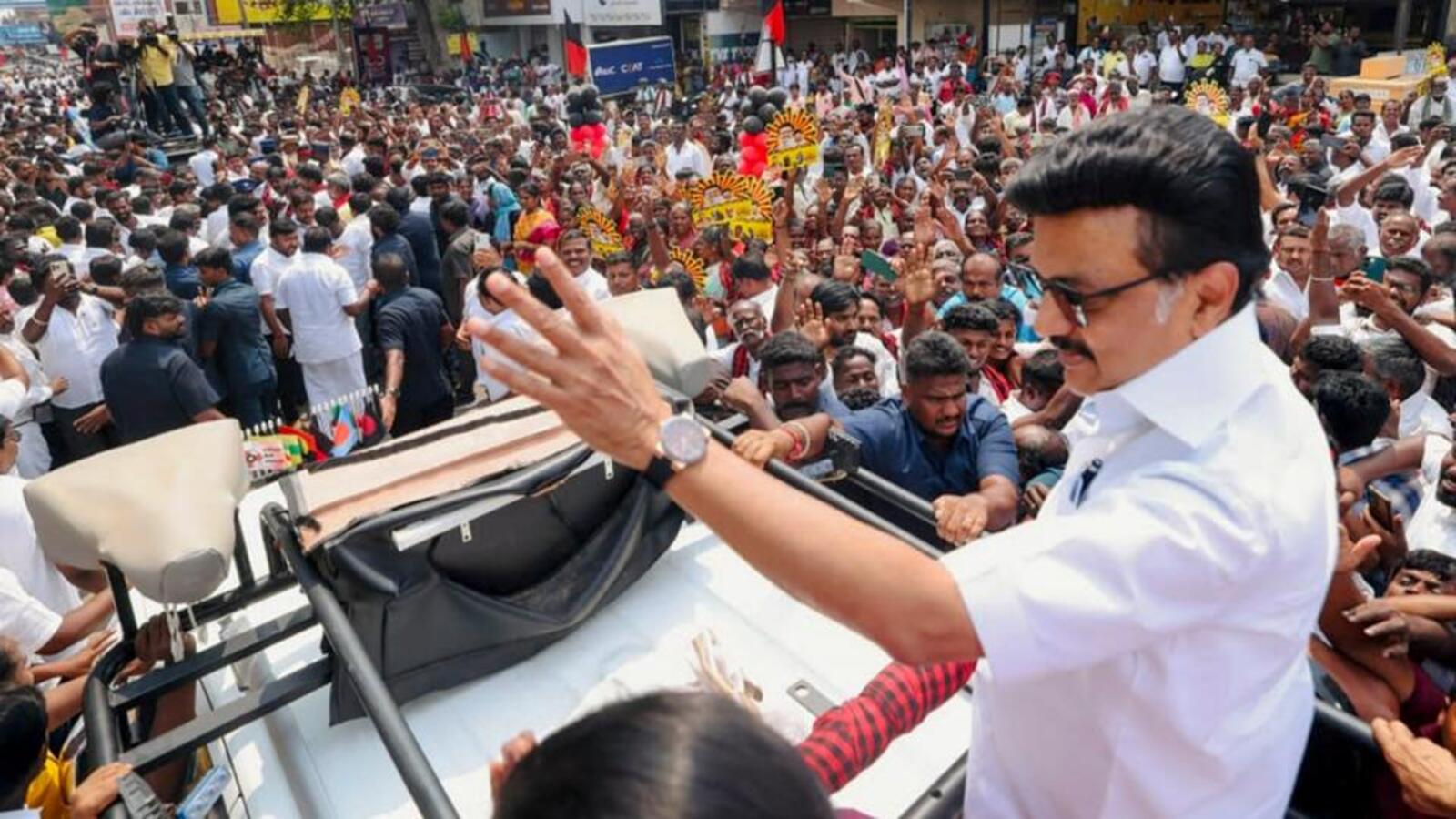
The DMK's support for the new delimitation bill has renewed questions about its political positioning, given its history of shifting alliances. With 22 MPs, the party is the fifth-largest in the Lok Sabha and its backing is consequential for a Constitution amendment bill that requires a two-thirds majority. A fresh bill, to be introduced in a special Parliament sitting from November 30, departs from the April Constitution amendment bill on women's reservation, which did not mention in writing a uniform 50% rise in seats across states or an extension of the delimitation freeze. That bill failed to secure the required majority on April 17, and the DMK had voted against it.
DMK president MK Stalin said on Friday that the party stood firm on two demands: that Tamil Nadu's share of Lok Sabha seats remain at 7.18%, even if the total number of constituencies is increased, and that the existing proportion of parliamentary representation among states be frozen for another 25 years. The new bill retains the 1971 Census as the basis for allocating seats among states while providing for redrawing constituencies within states based on the latest published census figures, prompting the DMK to extend its support on Friday.
Whether the DMK will join the BJP-led NDA is a bigger question. The party was the fourth-largest ally of the BJP-led NDA in the Atal Bihari Vajpayee government that took office in 1999 with 12 MPs. Regional dynamics, more than ideology, drove that alliance: the BJP had contested the 1998 elections in Tamil Nadu with the AIADMK, which withdrew support in April 1999 and the Vajpayee government lost the confidence vote by one vote. The 1999 elections saw the BJP and DMK join hands, though the alliance ran into rough weather by the 2001 assembly elections. The DMK returned to the Congress in 2004 and fought every Lok Sabha election since, except 2014, in alliance with it. That partnership ended in 2026 when the DMK-led alliance lost the elections and TVK emerged as the single-largest party, falling just 10 short of the majority mark; the Congress, which had five MLAs, joined the TVK government. This led to the DMK distancing itself from the INDIA bloc and opening the possibility of supporting the bill.