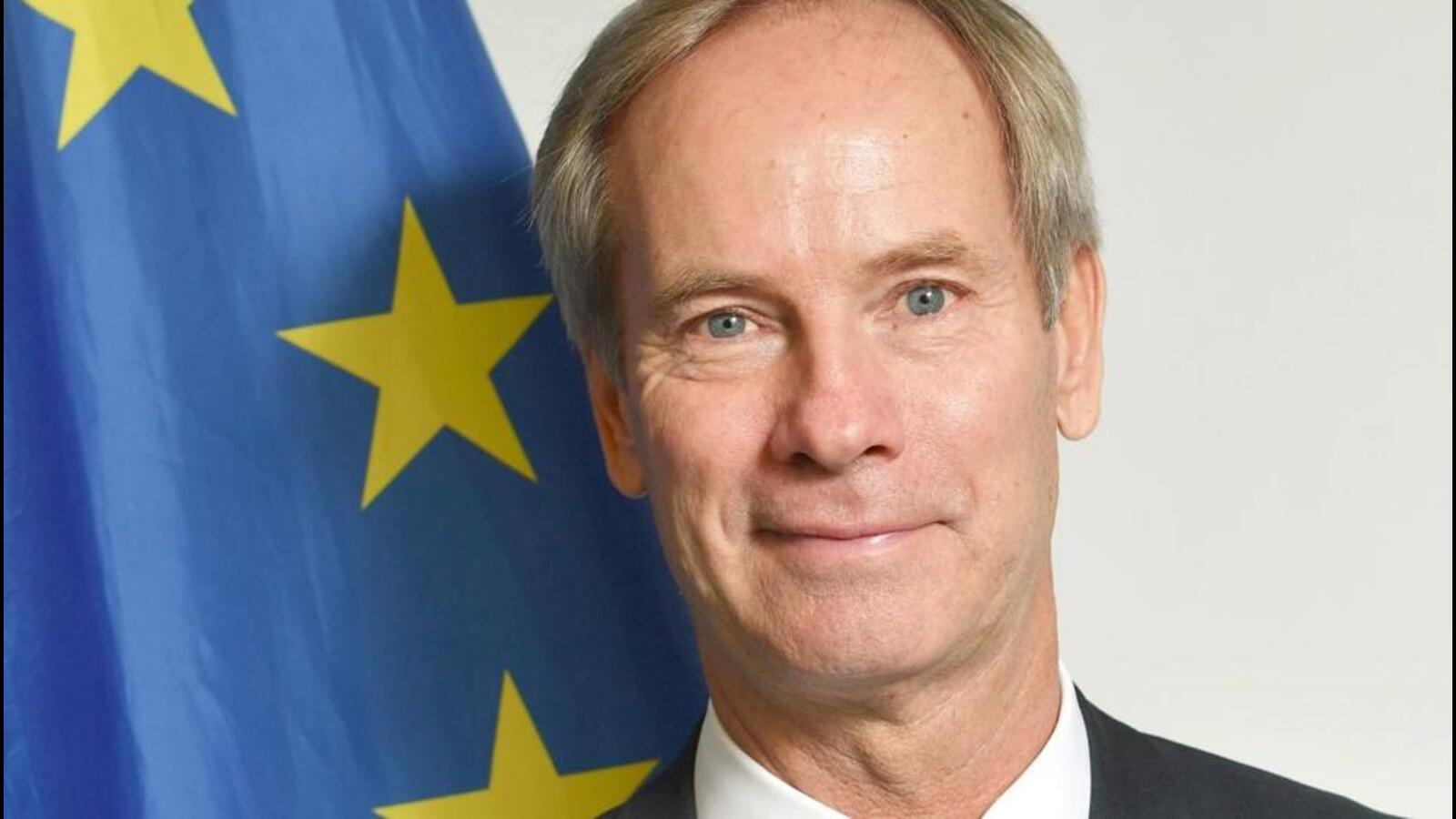
India and the European Union have compelling reasons to deepen cooperation given their shared belief in a rules-based order, freedom of navigation and respect for sovereignty, EU deputy secretary general for political affairs Olof Skoog said on Friday, pointing to the actions of China and Russia and even US trade policies as the backdrop. Skoog, who is in New Delhi for political consultations ahead of the signing of the India-EU free trade agreement (FTA) next month, welcomed India's proposals for ending hostilities but noted in an interview that most such moves had been blocked by Russia.
On the FTA, Skoog said the process is going well, with the 27 countries examining it ahead of a signature on December 16, to be followed by scrutiny by the European Parliament. He said preliminary applications could still begin next year even though ratification comes later, and stressed that both sides must inform and encourage the private sector to apply the agreement and draw its benefits. On a bilateral investment agreement, he said predictability, safety and security for investments are needed to release the full potential of the FTA, and that work remains to be done on that front.
Skoog said the India-EU Security and Defence Partnership has already led to more intense and regular consultations and a relationship of greater trust, with earlier sensitivities gone. He said the two sides are conceptually moving from a buyer-seller equation to cooperation on hard security as they seek to break dependencies of the past with reliable and predictable partners. He noted that the EU can provide conditions for such defence cooperation, including loans to member states that can be used for big investments and for inviting partners with security and defence partnership agreements, India among them.
Asked whether India's long-standing military relationship with Russia acts as an impediment, Skoog said the Russia relationship is integral to the EU's dialogue with India, adding that the deterioration of security in Europe is not limited to Russian aggression against Ukraine but includes what he described as a very aggressive posture by Russia towards EU countries. He said anything seen to facilitate that posture, materially or politically, is very sensitive to Europe. He also said cooperation on hybrid threats, disinformation and protection of critical infrastructure is an area where further collaboration is needed, noting that foreign interference and manipulation of information will always be used to influence elections in democracies.