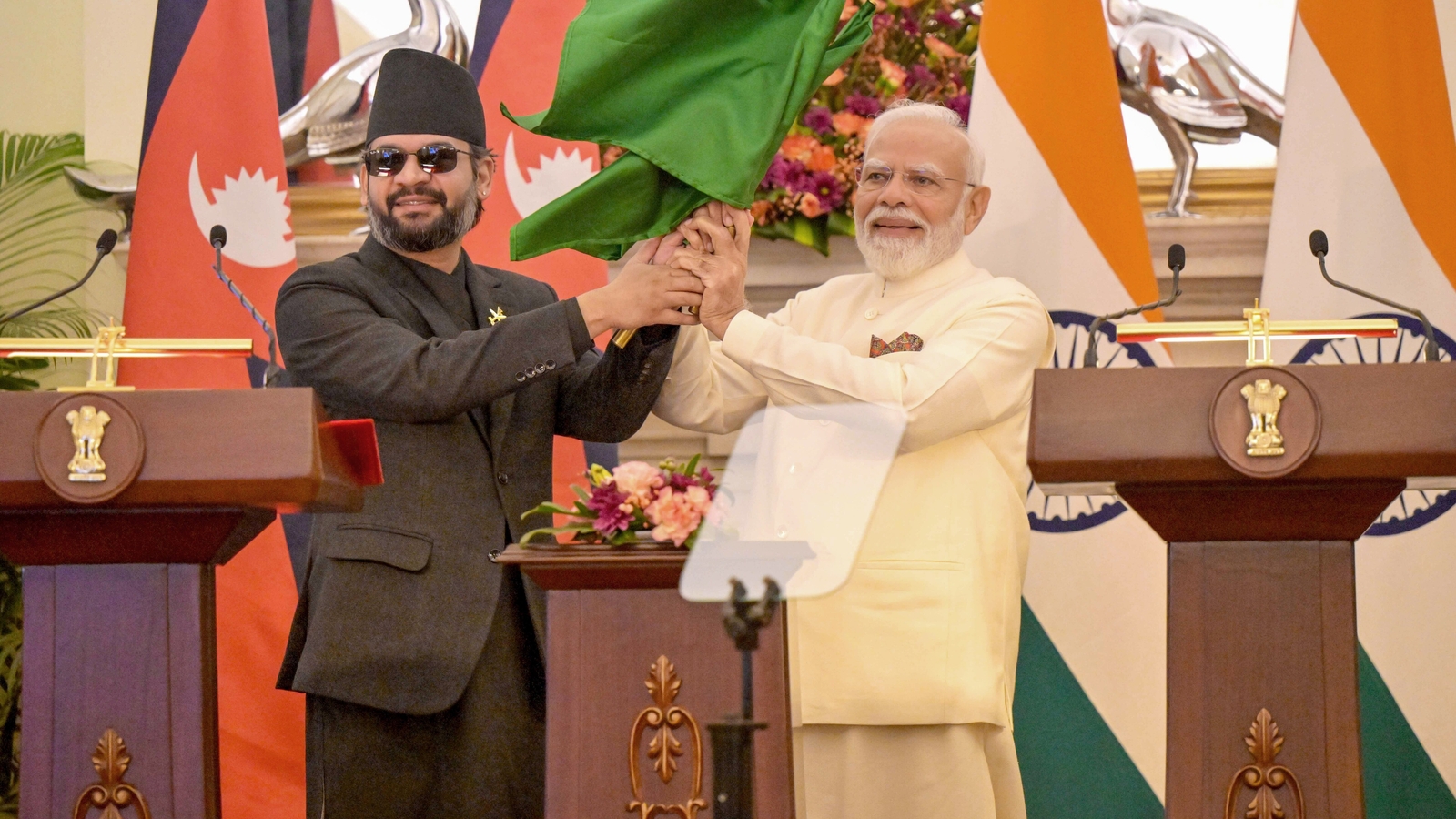
India and Nepal on Monday unveiled a joint vision document titled "Viksit Bharat and Samunnat Nepal", which sets out an updated framework for bilateral ties and provides for a review of the Treaty of Peace and Friendship of 1950. According to the document, Prime Minister Narendra Modi and his Nepalese counterpart Balendra Shah agreed that the partnership should reflect contemporary political, economic and technological realities and rest on an "updated and forward-looking legal framework". Existing bilateral agreements, including the 1950 treaty, "could be reviewed on the basis of mutual consent", while outstanding matters related to water resources, energy, trade and the boundary "are to be resolved through mutual discussion and dialogue", it states.
Foreign secretary Vikram Misri told a media briefing that the work of the Eminent Persons Group (EPG) is "in the past" and no longer relevant to the treaty review process. "We are looking at a forward-looking approach to this particular issue. We are not looking backward and to me, therefore, the [EPG] report…is not relevant," he said, adding that the exercise would proceed in keeping with the forward-looking vision of the new document. The EPG, formed in 2016 with four members each from India and Nepal, held nine meetings during 2016-2018 before reportedly finalising its report, which has never been made public.
Misri said the two sides had not yet decided on the mechanics for reviewing existing agreements, though mechanisms such as foreign office consultations led by the two foreign secretaries and the joint ministerial commission headed by the foreign ministers could be used. He noted that references to re-looking at the 1950 treaty had figured in earlier bilateral documents but discussions had not moved forward for various reasons, and that both sides would need to do "homework" before mutually agreeing on the best mechanism.
On boundary issues, Misri said Nepal's claims to areas such as Lipulekh had not figured in Monday's discussions. He said a multi-layered architecture, ranging from field survey teams to the boundary working group, has made "very good and smooth progress" on technical work along the vast majority of the settled boundary, and that Modi and Shah have directed the two foreign secretaries to take border management forward.