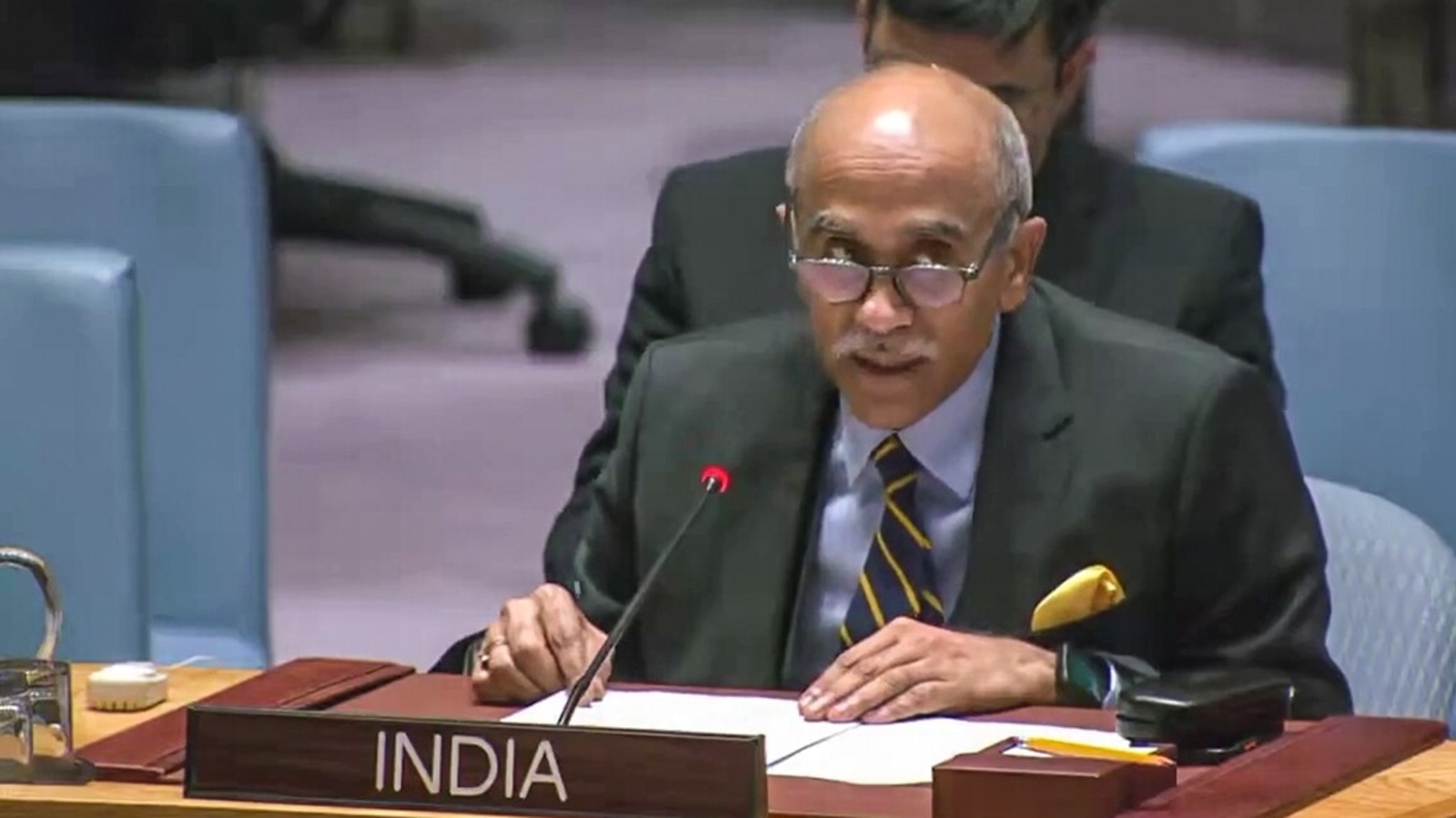
India pushed back against Pakistan at a United Nations Security Council Arria-formula meeting on natural resources and conflict, convened by Liberia, after Islamabad's delegation raised the Indus Waters Treaty. India's Permanent Representative to the UN, Ambassador Parvathaneni Harish, said New Delhi had not intended to discuss bilateral issues at the forum but was compelled to respond to Pakistan's remarks, which he said misused the discussion to peddle propaganda. He stated that India's position on the Indus Waters Treaty remains clear and consistent and has been articulated at multiple fora.
The Indian envoy accused Pakistan's military of exploiting the country's natural resources for personal gain and of triggering domestic political turmoil to retain control over them. He referred to Pakistan's army chief being seen displaying a wooden box filled with mineral stones to foreign leaders last September, which he described as a clear indication of the army's role in this exploitation, and linked it to the recent dismissal of a provincial government in Pakistan and the imposition of a state of emergency there. He also referred to the previous year's White House photograph of Pakistan's Prime Minister and Army Chief gifting rare earth minerals to the US President. Calling the military Pakistan's actual decision-makers, he said the country's top brass prioritises its own enrichment and cross-border hostility over the welfare of ordinary Pakistanis.
Ambassador Harish laid out India's position on global governance of natural resources, thanking Liberia for hosting the discussion and noting that its own journey from conflict to recovery lent weight to the exchange. He argued that countries should rely on existing voluntary, consensus-based and nationally led frameworks that curb illegal trade without harming legitimate business, rather than creating new international rules, citing the Kimberley Process as an instructive example and noting India's chairmanship of it in 2026. He emphasised that lasting peace occurs only when local citizens directly profit from the wealth extracted from their land, citing India's mining laws, which require companies to fund local community development, as a working model.