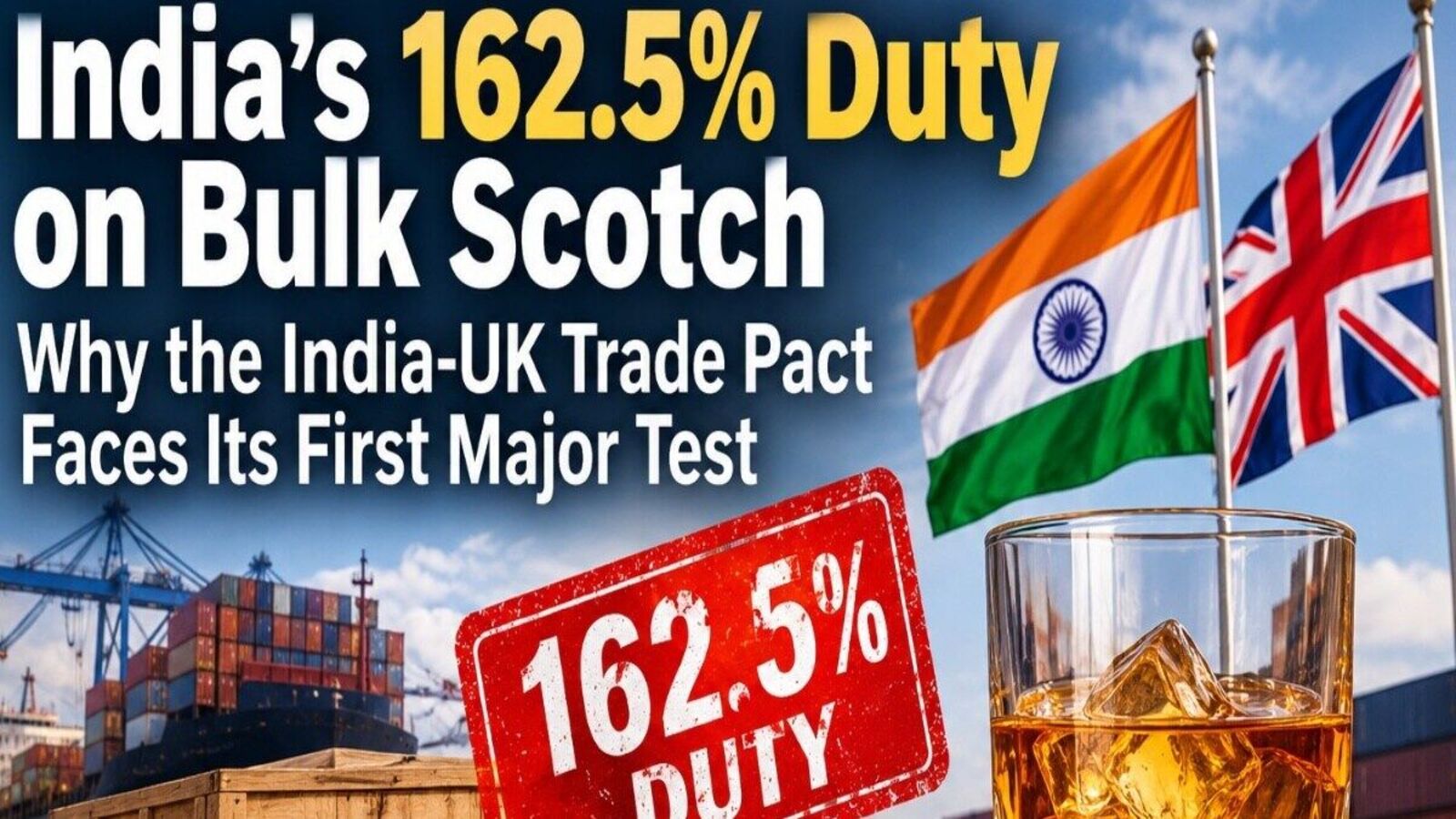
India has imposed an effective import duty of 162.5% on bulk Scotch whisky, triggering a dispute with major liquor companies including Pernod Ricard, Diageo and Bacardi, months after the India-UK trade agreement cut tariffs on Scotch to 75%. According to reports citing eight sources and a government document, Indian investigators believe liquor companies have been using incorrect customs classifications to import bulk Scotch concentrates used to make blended whiskies. The investigators reportedly argue these imports should fall under a newly created customs category, "compound alcoholic preparations", which attracts a 150% tariff, with an additional consumption tax taking the effective duty to 162.5% — higher than the 150% rate applicable before the pact.
The disagreement marks the first major trade-related dispute since the India-UK agreement came into effect on July 15. While the pact reduced Scotch tariffs to 75%, liquor companies reportedly believe both bulk and bottled Scotch imports should qualify for that rate. The dispute has left thousands of litres of bulk Scotch in more than 80 shipping containers belonging to the three companies stuck at Indian ports, according to reports. Under a provisional release arrangement pending the investigation, companies must pay 75% of the goods' value upfront, with the remainder covered through bank guarantees — a requirement that could pressure working capital, particularly for smaller manufacturers.
The scrutiny also extends to Indian liquor manufacturers that import bulk Scotch for blending, including Mumbai-listed Radico Khaitan, Allied Blenders and Distillers, and Tilaknagar Industries, reports said. About 80% of Scotch whisky imports from Britain by volume arrive in bulk, and most are used to produce Indian-Made Foreign Liquor whisky, where small quantities of Scotch are blended with other spirits to make mass-market brands cheaper than fully imported labels. Pernod Ricard and Diageo have reportedly arranged bank guarantees and additional funding to secure release of shipments, while Bacardi is still evaluating its next steps, according to sources cited in reports.
The higher effective duty has also created fresh uncertainty over import costs, with concerns that a prolonged delay in releasing bulk Scotch shipments could affect production of blended whiskies. Companies had already reduced Scotch prices in India after the trade agreement took effect in July. The extent of any impact on retail prices remains uncertain, reports said.