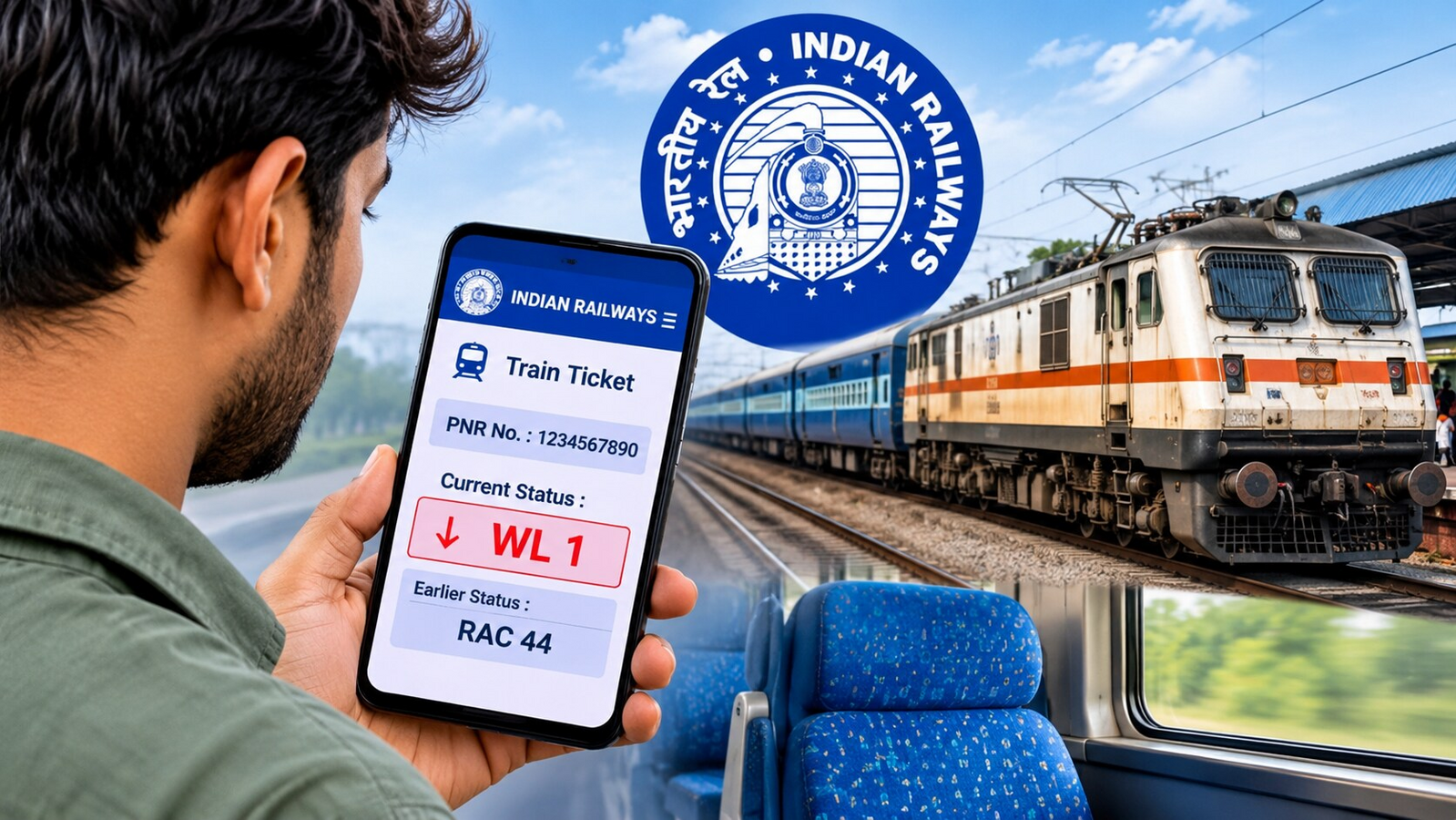
A district consumer commission in Kerala has ordered the Central Railway to pay Rs 25,000 to a passenger, holding it guilty of deficiency in service and unfair trade practice for automatically cancelling his RAC ticket without prior intimation, The Indian Express reported. In its August 17 order, the Malappuram District Consumer Disputes Redressal Commission directed the Railways to pay Rs 20,000 as compensation for the inconvenience caused and Rs 5,000 towards litigation expenses.
The complainant, a law student at KC Law College in Mumbai, had booked a ticket through the IRCTC application to travel from Mumbai to Malappuram, citing an emergency that required him to return home. His ticket initially showed a current reservation status of RAC 44, but it was subsequently downgraded to waiting list (WL) 1 and eventually cancelled automatically. He alleged that neither the Railways nor IRCTC had adequately explained the downgrade or cancellation, and he also questioned the deduction of Rs 65 as clerkage charges, arguing that the cancellation was not his fault. With his original ticket cancelled, he had to book another ticket for the same train at a higher fare.
Defending the Central Railway, advocate Krishna Kumar KM argued that an RAC ticket was subject to accommodation availability and could not be treated as a confirmed reservation until the final chart was prepared, and that clerkage deductions followed a uniform policy. IRCTC, represented by advocate Jaison Thomas, argued that its responsibility was limited to providing an online ticket-booking platform, saying berth allocation, chart preparation and automatic ticket cancellations were handled by the Railways.
Examining the ticket records and RTI responses, the commission noted that the passenger's reservation status had changed from RAC 44 to WL 1 before the ticket was cancelled. The Railways had informed him that the 3A coach had been replaced by a 3E coach due to unavoidable circumstances, necessitating the reallocation of confirmed passengers, and customer support had also cited the detachment of some coaches due to operational constraints. The commission, however, considered the hardship caused by the cancellation without prior notice, particularly since the passenger had to purchase a higher-cost ticket for an emergency journey. It did not hold IRCTC liable, accepting that its role was confined to ticket bookings.