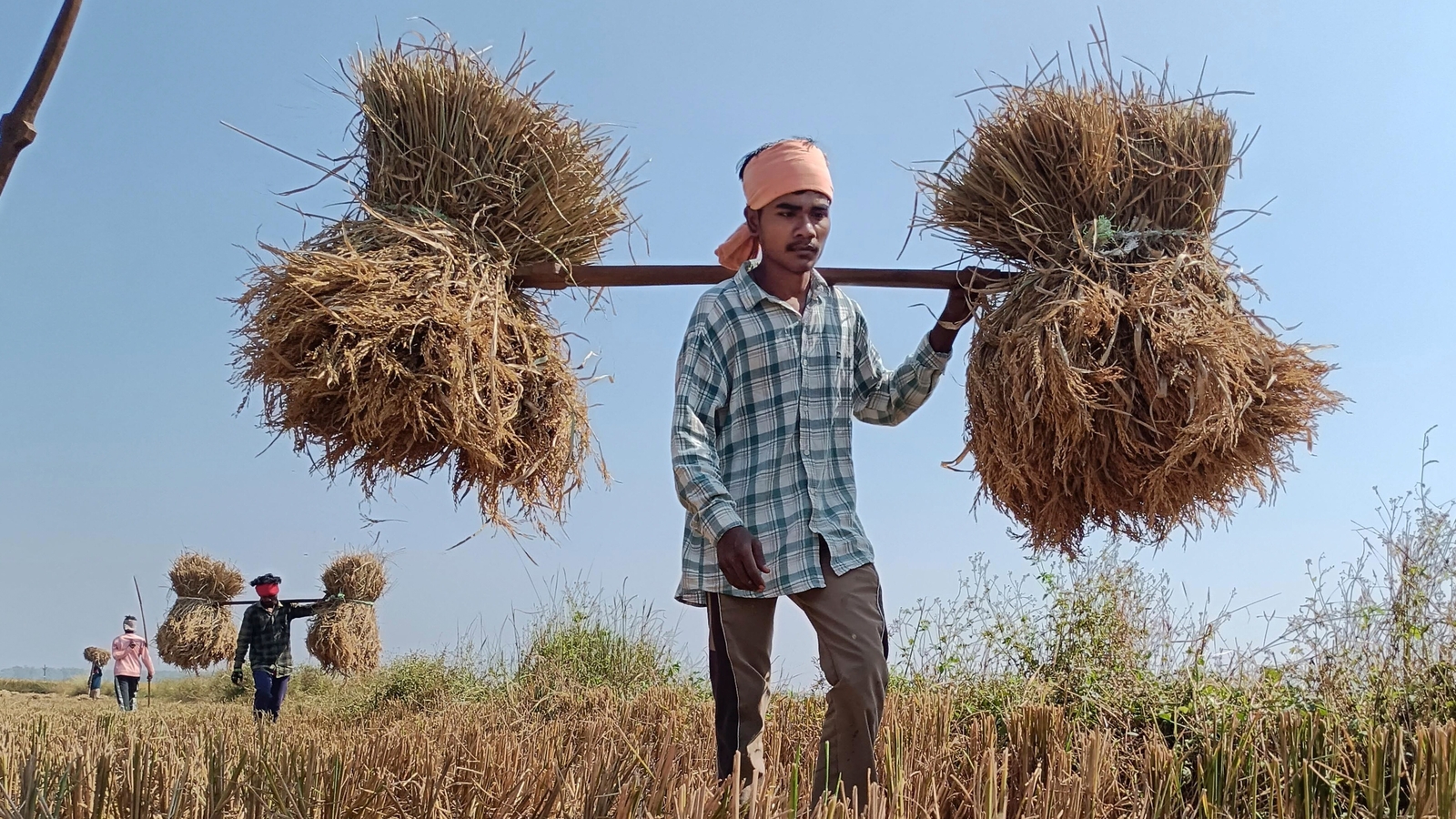
India's kharif foodgrain production is estimated at 167.14 million tonnes for the 2026-27 crop year, down 3.6% from 173.33 million tonnes in the first advance estimates for 2025-26, according to figures released by Union agriculture minister Shivraj Singh Chouhan on Thursday. The estimate is also 7 million tonnes, or 4%, below the 174.14 million tonnes projected for the 2025-26 kharif season in the second advance estimates released in March.
The minister attributed the lower projection to the return of El Nino, the slow advance of the monsoon, long dry spells in western and peninsular states, and deficient rainfall early in the season. June rainfall was 35-40% below normal, and low soil moisture and drought-like conditions in major farm states, including Maharashtra, Karnataka, Telangana and Andhra Pradesh, hurt the sowing of paddy, maize, tur, soybean and cotton.
Kharif rice, the largest component of the season's foodgrain output, is estimated at 121.91 million tonnes, about 2.1% below the 124.50 million tonnes in the first advance estimates for 2025-26. Nutri and coarse cereals are projected at 38.11 million tonnes, including 26.06 million tonnes of maize and 8.94 million tonnes of bajra. Kharif pulses are estimated at 7.13 million tonnes, comprising 3.12 million tonnes of tur, 1.66 million tonnes of moong and 1.45 million tonnes of urad. Oilseeds are projected at 23.95 million tonnes, including 11.17 million tonnes of groundnut and 10.24 million tonnes of soybean. Among commercial crops, sugarcane is estimated at 454.34 million tonnes and cotton at 24.87 million bales of 170kg each.
Chouhan said the kharif foodgrain estimate was 9.77 million tonnes higher than the average kharif output of the previous five years, attributing this to the resilience of farmers, government schemes and climate-resilient crop varieties developed by agricultural scientists. He said the figures were preliminary and would be revised in the second and final estimates once yield data from crop-cutting experiments conducted at harvest became available. The first advance estimates are based on state reports, remote sensing and digital crop surveys, not measured yields.