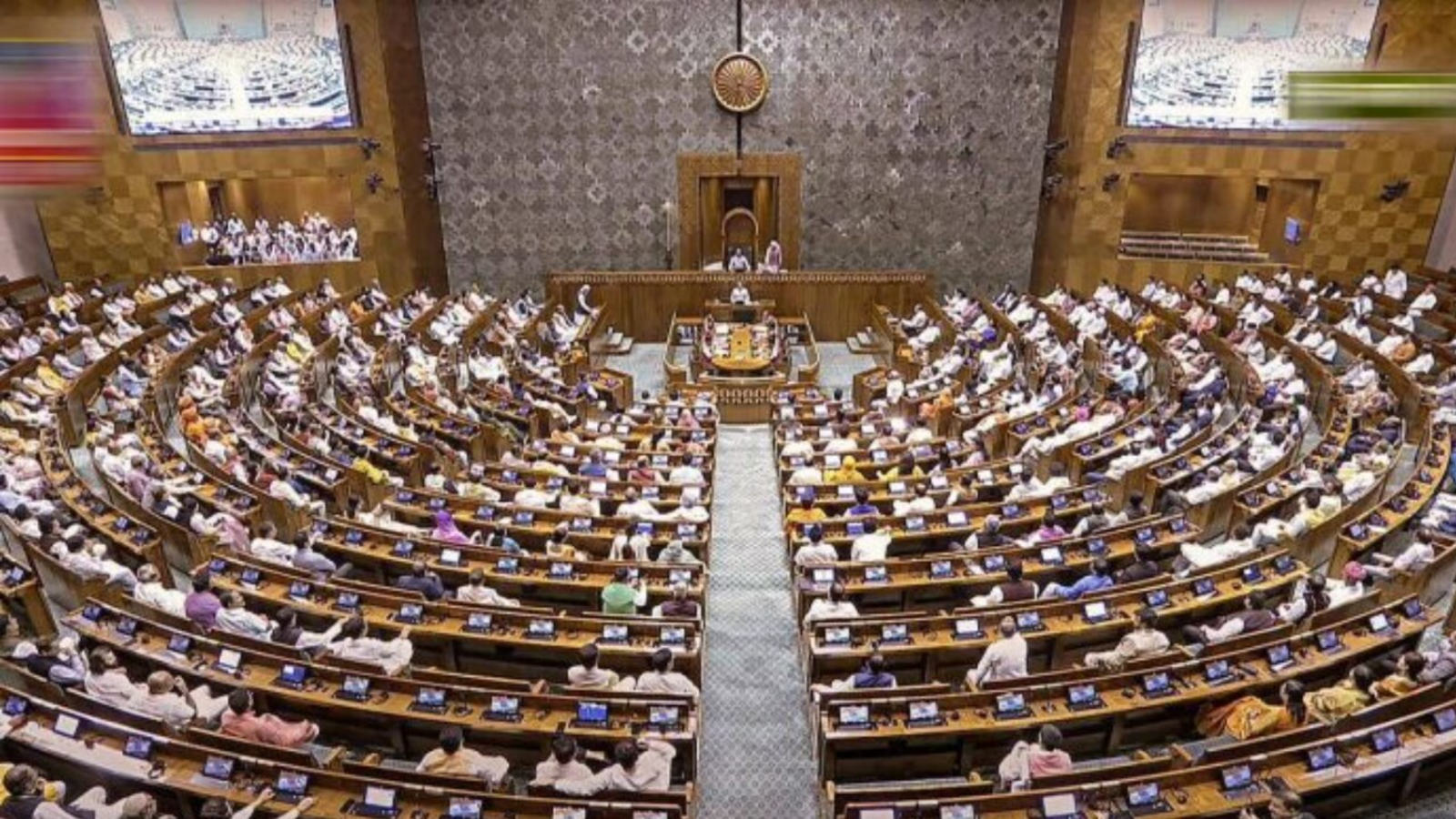
The Centre is considering raising the Lok Sabha's maximum strength to 850 members as part of a renewed push to implement 33% reservation for women in Parliament and state assemblies before the 2029 general election. According to reports, the Union Cabinet is likely to take up changes to the Constitution (131st Amendment) Bill and the Delimitation Bill, which were withdrawn in April after the government fell short of the required two-thirds majority in the Lok Sabha. Parliamentary affairs minister Kiren Rijiju on Thursday said the government has asked Speaker Om Birla to reconvene the Lok Sabha on November 30 and Rajya Sabha Chairman C P Radhakrishnan to call a sitting of the House on December 2. The Delimitation Bill is likely to top the agenda of the short session, according to multiple media reports.
The proposed constitutional amendment seeks to raise the Lok Sabha's maximum strength from 550 to 850 members, with up to 815 seats for states and 35 for Union Territories. The Rajya Sabha's maximum strength of 250 members would remain unchanged. The expansion is intended to facilitate implementation of the 33% women's reservation law before the 2029 Lok Sabha election. Under the proposed changes, the delimitation exercise would be based on the latest published Census, which in practice would mean using the 2011 Census.
A larger House would mean higher expenditure on running Parliament and supporting its elected representatives, including additional salaries, constituency allowances, office expenses, travel allowances and other facilities for MPs. It could also require more parliamentary staff, administrative support and infrastructure, including office space and facilities for conducting proceedings. The expansion could also raise the permissible size of the Union Council of Ministers. Under Article 75(1A), the total number of ministers, including the Prime Minister, cannot exceed 15% of the Lok Sabha's strength. If the strength rises to 815 members, the constitutional ceiling on the Council of Ministers could go up from 81 to 122, though this would be the maximum permissible strength and would not automatically require the government to appoint additional ministers. The exact expenditure would only be known once the Bill passes and the government announces the budget for it, and the delimitation exercise itself would be time and cost consuming.
The proposed expansion has triggered concerns among southern states, which have recorded slower population growth than several northern states, as a delimitation exercise based purely on population could reduce their relative representation in Parliament. To address these concerns, the government is considering a formula under which every state could receive an increase of up to 50% in its Lok Sabha seats while retaining the existing inter-state proportions based on the 1971 Census, according to reports. The formula is still under consideration, and the revised draft may also restore the 1971 Census as the basis for distributing seats among states. The earlier proposal was defeated in the Lok Sabha on April 17, securing 298 votes in favour and 230 against, falling 54 votes short of the required 352.