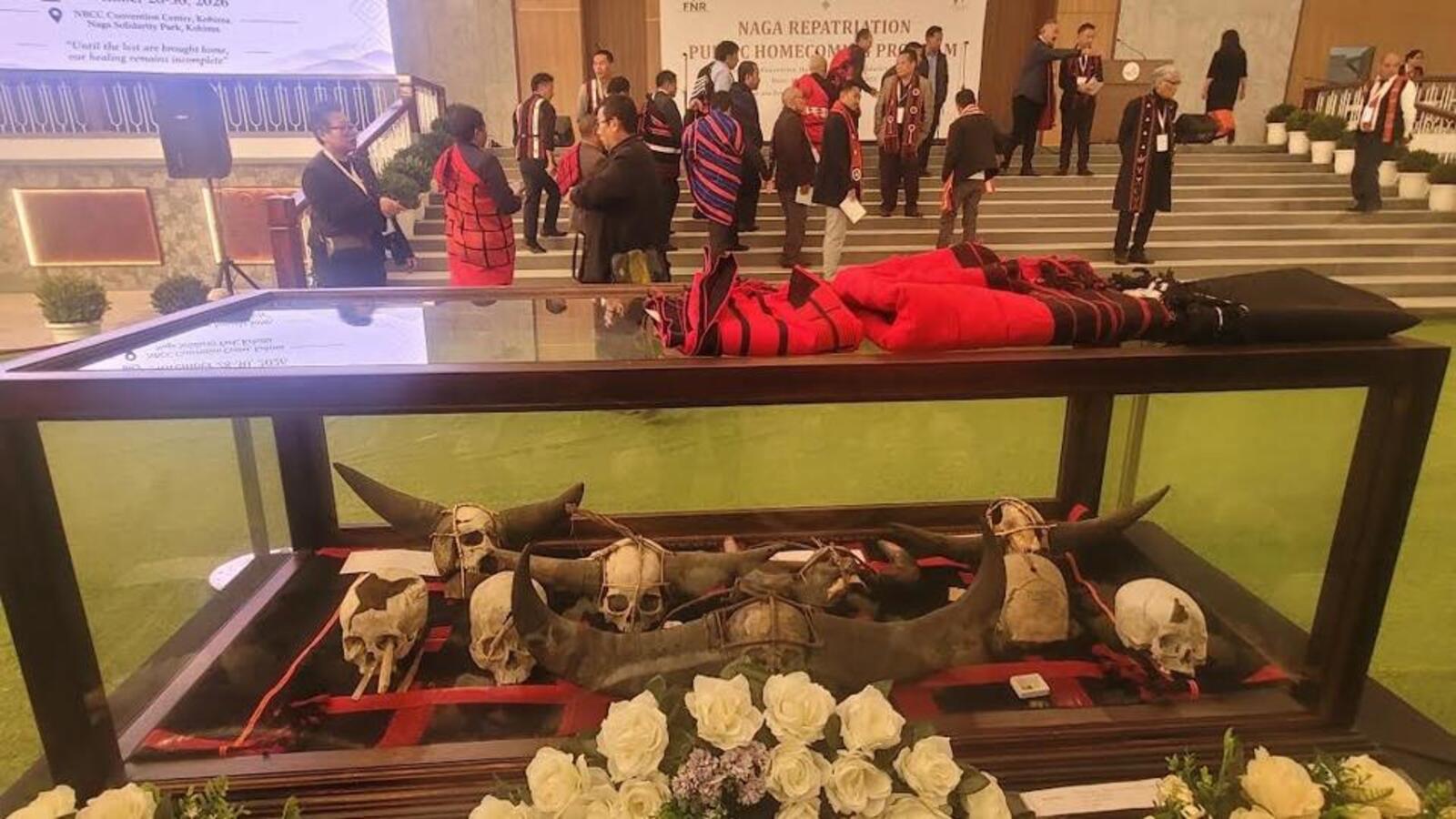
Hundreds of people gathered at the NBCC Convention Centre in Kohima, Nagaland, on Saturday to pay their last respects to 39 Naga ancestral human remains repatriated from the United Kingdom, where they had been housed at the Pitt Rivers Museum for more than a century. The remains arrived in Nagaland on Friday, concluding a six-year effort by the Forum for Naga Reconciliation (FNR) and Naga tribal bodies to bring them home for a dignified burial.
Chief Minister Neiphiu Rio, addressing a solemn public homecoming programme, said the return was a historic moment for the Naga people and the restoration of a part of their identity, history and collective memory. He described the remains' journey away from their homeland as a painful reminder of a chapter marked by colonial encounters, and thanked the FNR, its research team from Recover, Restore and Decolonise (RRaD), Naga tribes and community leaders, as well as the Pitt Rivers Museum and the University of Oxford for facilitating the process.
Rio said the repatriation was a complex process requiring sustained engagement with several Central ministries and departments for clearances, and appreciated the role of ministries including External Affairs, Finance, Culture and Civil Aviation, along with the Archaeological Survey of India, in securing the necessary permissions under the Antiquities and Art Treasures Act, 1972. The Nagaland government provided administrative and financial support for the repatriation.
FNR convener Rev. Dr Wati Aier said the homecoming was more than the return of human remains, calling it a restoration of dignity and a recognition that every human life bears an identity. According to the FNR, British anthropologists and collectors had donated Naga artefacts, including ancestral human remains, to the Pitt Rivers Museum since its establishment in 1884. The 39 remains, believed to belong to members of eight Naga tribes — Phom, Konyak, Yimkhiung, Khiamniungan, Sümi, Pochury, Chang and Tangkhul — will be given a dignified burial on November 30 at the Naga Solidarity Park in Kohima.