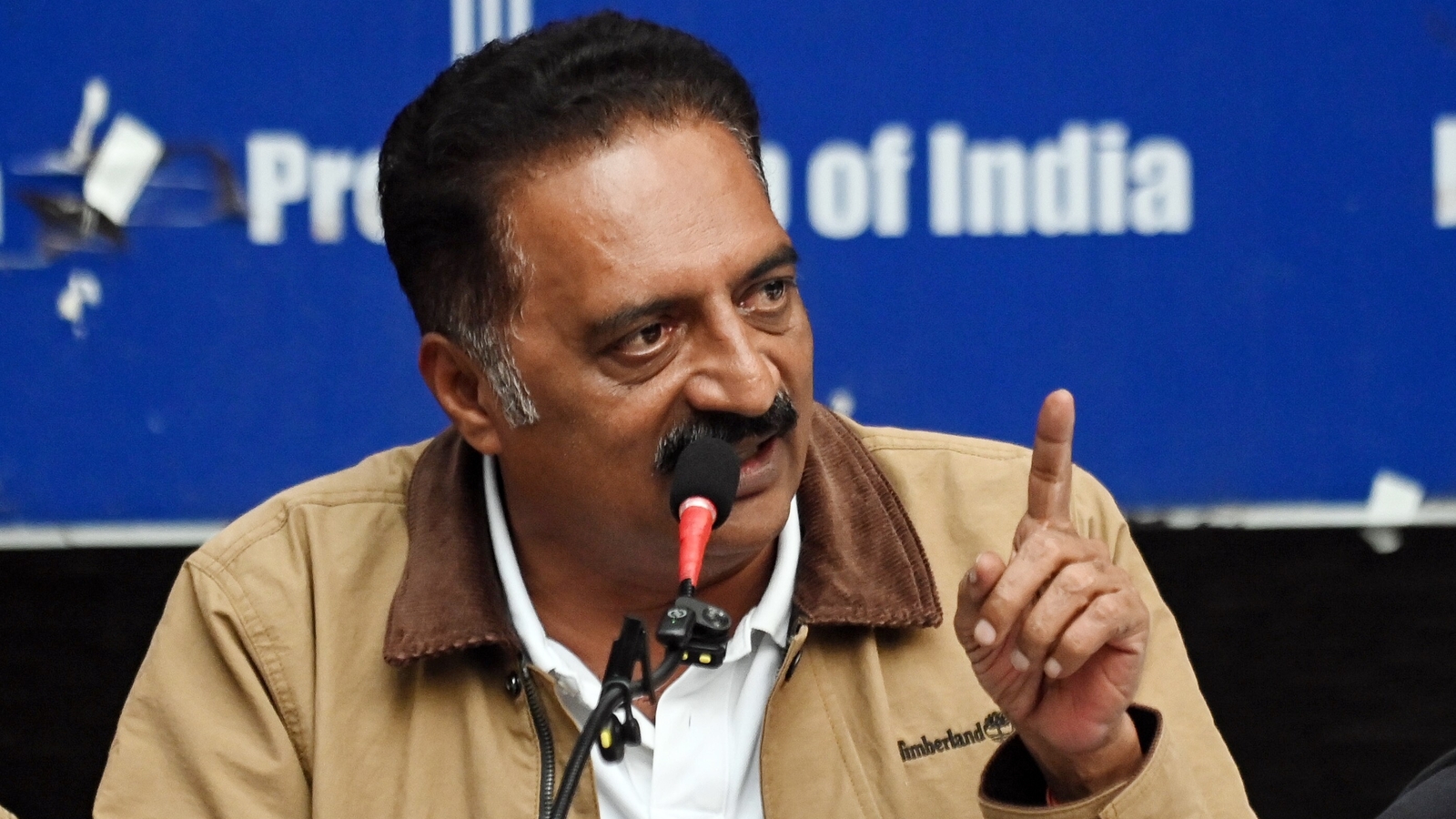
Actor Prakash Raj on Saturday described the Dravida Munnetra Kazhagam's position on delimitation as an "act of betrayal" and urged party chief MK Stalin to reconsider the decision to support the Centre's proposed bill on the matter. Raj said the stand went against principles the DMK had long championed, while accusing the party of "aiding communalism". His remarks came hours after the DMK said it would support the delimitation bill proposed by the Centre, adding that the party's core demands were included in the proposed bill.
Raj called the DMK's stance a "selfish decision", saying, "The DMK, which once made everyone aware of these dangers, is now aiding communalism—is this not an act of betrayal." The government has called a special Parliament session from November 30 to December 3, where it will table the Delimitation (Second) Bill, 2026 and the Constitution (132nd Amendment) Bill. The latter seeks to amend constitutional provisions to enable implementation of the one-third quota for women after the first delimitation exercise following its commencement.
In a video posted to his official X handle, Raj directly addressed Stalin and alleged that the proposed bill was "extremely dangerous". He said the legislation "goes against the principles of religion, language, and ethnicity, and threatens the sovereignty of this nation." Raj said the DMK would be making a "historic blunder" if it supports the bill, while claiming that it "betrays the people at large". In the caption of his post, Raj said, "A request to Thiru Stalin sir. In the interest of the nation, please reconsider your support to #DelimitationBill."
Stalin said the proposed bill has accepted the "fair delimitation" demands put forth by his party. "One must pause and think without getting carried away about what would happen if we were to miss out on this Delimitation Bill, which provides a 50 per cent increase in constituencies for all states based strictly on the 1971 population," he said. The DMK chief had earlier reiterated two demands on delimitation—that Tamil Nadu's share of Lok Sabha seats remain at 7.18% even if the total number of constituencies is increased, and that the existing proportion of parliamentary representation among states, based on the 1971 Census, be frozen for another 25 years.