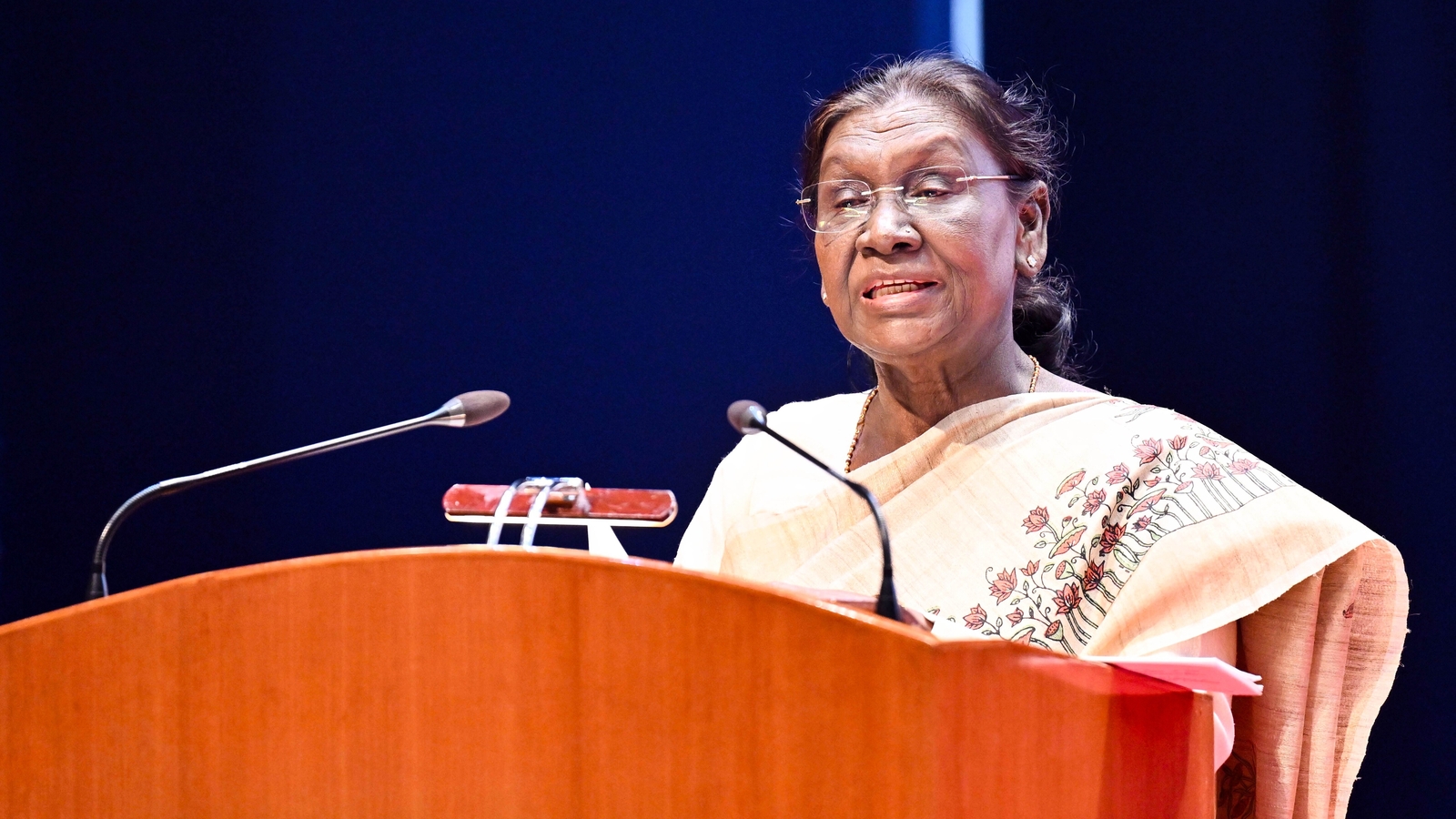
President Droupadi Murmu on Saturday recommended that the Lok Sabha consider the Delimitation (Second) Bill, 2026 under Article 117(3) of the Constitution, ahead of a special Lok Sabha sitting from November 30 to December 3.
The Bill, cleared by the Union Cabinet on Friday, proposes to add 50% to every state's and Union territory's Lok Sabha seats, and to every assembly. A companion Bill, the Constitution (132nd Amendment) Bill, says each state's share of the Lok Sabha would remain the same till 2051. Both Bills are due to be introduced in the Lok Sabha, which meets from Monday for a four-day special sitting. After delimitation, the number of Lok Sabha seats will increase to up to 850, of which 815 will be from states and 35 from Union territories.
Article 117 of the Constitution deals with special provisions relating to Financial Bills. According to Bar and Bench, Article 117(3) pertains to a Bill that, if enacted and brought into operation, would involve expenditure from the Consolidated Fund of India. Such Bills cannot be passed by either House unless the President has recommended their consideration.
Each state's share of Lok Sabha seats has been based on the 1971 census since 1976. Under the new Bills, the state's Lok Sabha seat share will increase by 50%, leaving the 1971 base in place. For every state, constituency boundaries will be redrawn using the latest available Census figures when the amendment comes into effect. Currently, constituency boundaries are based on the 2001 Census. Since the 2027 Census is still underway, the 2011 Census is likely to be the basis for redrawing constituency boundaries if the amendment comes into force and the delimitation process begins. Both the seat numbers and the boundaries then stay in place until 2051. The existing freeze was due to end with the first census after 2026.