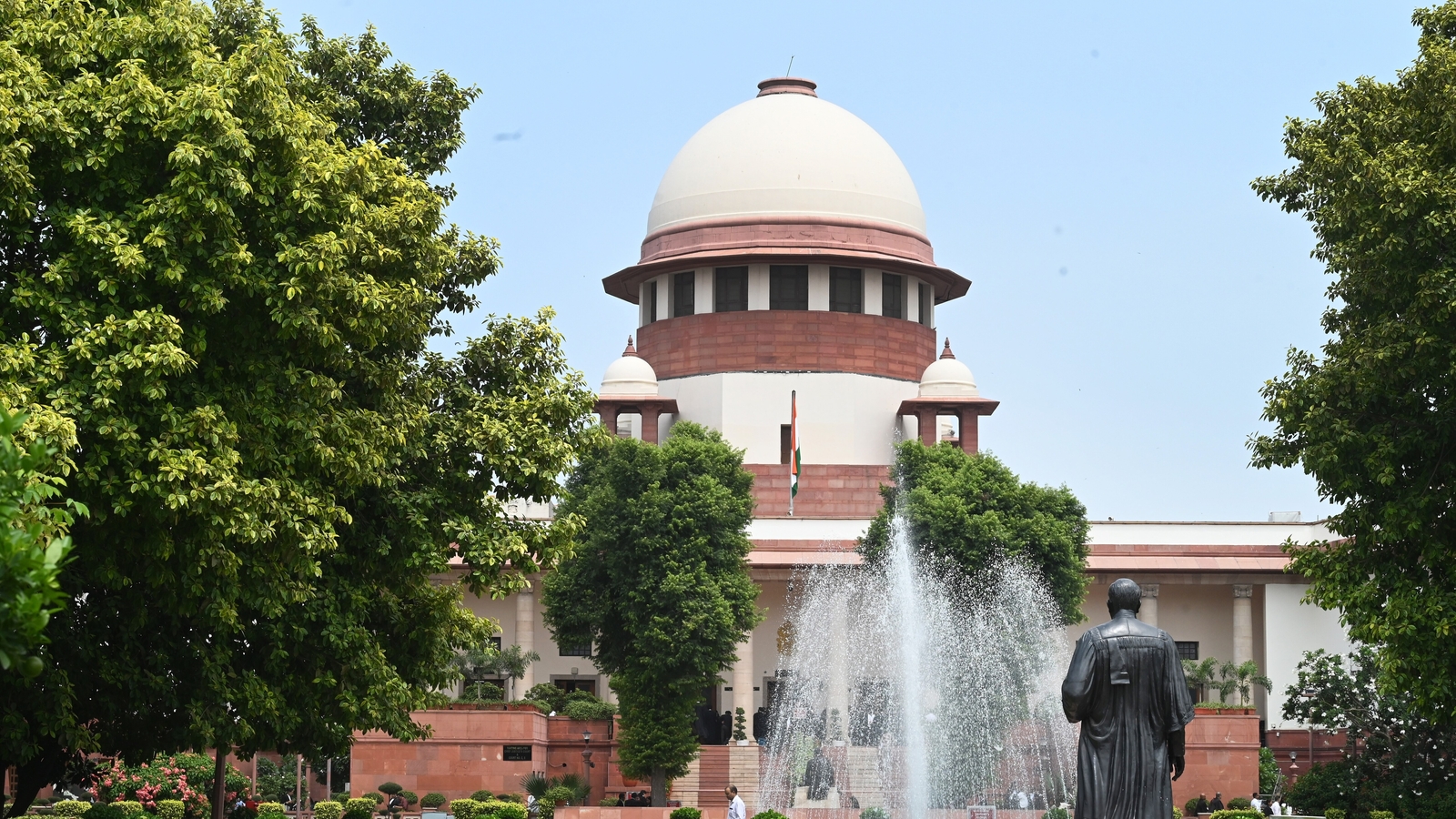
The Supreme Court on Friday asked the Centre to respond to a petition seeking greater awareness about the adverse health risks of consanguineous marriages, while observing that restricting such unions falls within the legislative domain. A bench headed by Chief Justice of India Surya Kant issued notice on the limited purpose of asking the Union of India to consider bringing suitable legislation or ensuring wide publicity on the negative impacts of such marriages.
The petition was filed by a law graduate whose parents are first cousins. She suffers from 40% visual impairment, photophobia and cone dystrophy, conditions that medical specialists attributed to children born to a consanguineous couple. The plea sought an amendment to the Hindu Marriage Act, 1955, and other laws governing such marriages, but the court held that this lay within Parliament's domain.
The bench, also comprising Justices Joymalya Bagchi and V Mohana, referred to Article 51A of the Constitution, which speaks of developing scientific temper. It noted that autonomy of choice in marriage has been recognised by courts on the basis of informed consent, observing that a person may choose to marry an HIV-positive person and it is not for courts to regulate this by mandate.
Senior advocate Kaadambari Singh, appearing for the petitioner, said the plea does not seek a complete or immediate judicial ban on all consanguineous marriages, adding that the petitioner is aware traditions are deeply ingrained in society and does not wish such marriages to be pushed into secrecy or illegality. The petition said the incidence of such marriages in southern states is as high as 28% and sought awareness at the level of Anganwadis and Panchayats, along with a phased national framework including premarital genetic counselling and voluntary genetic screening in high-prevalence regions.