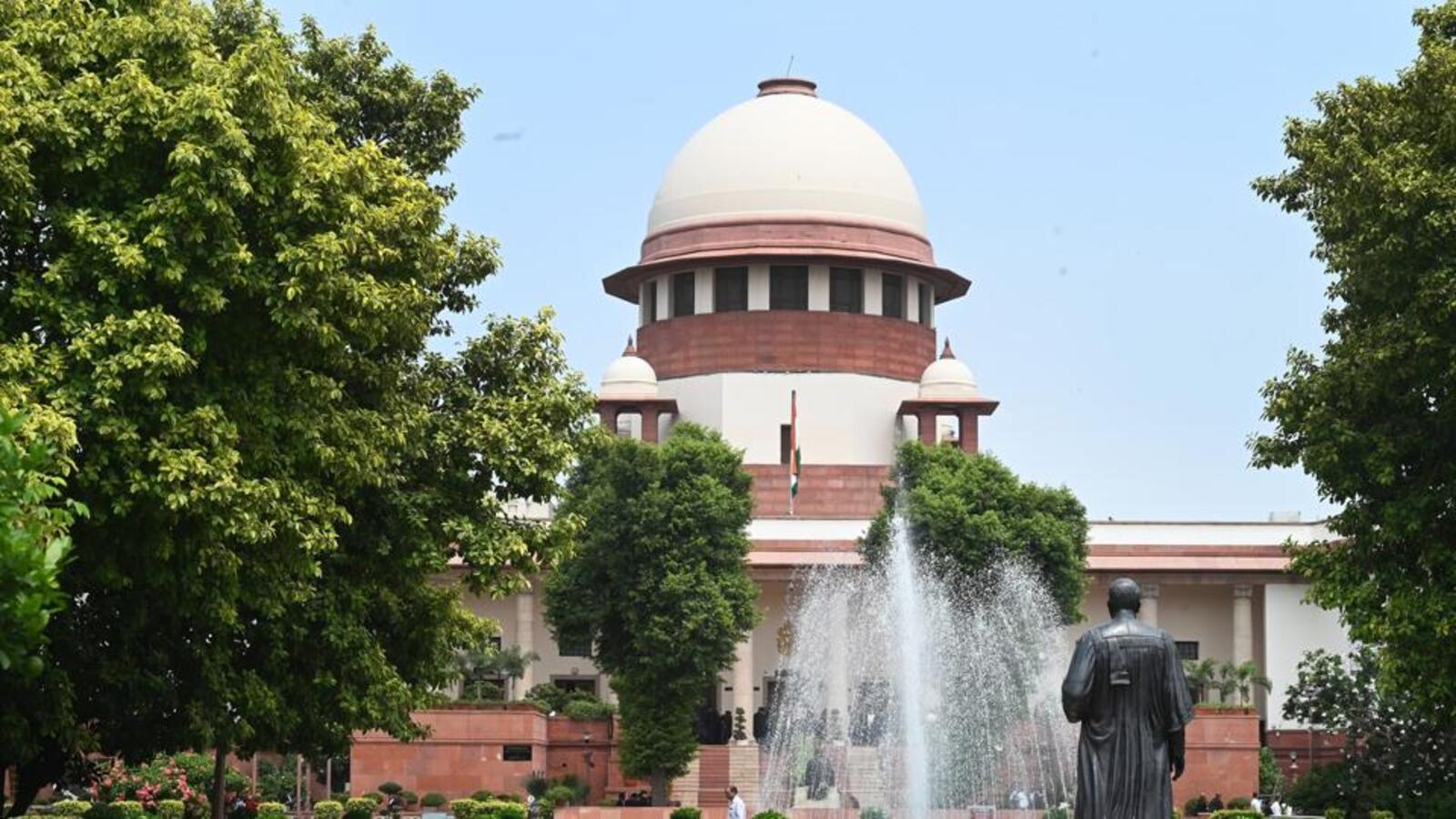
The Supreme Court on Wednesday sought responses from the Congress, the Aam Aadmi Party (AAP), the Cockroach Janta Party (CJP) and the All India Students Union (AISA) on a petition by Delhi traders' associations challenging the designation of Ramlila Maidan as a protest venue. A bench headed by Chief Justice of India Surya Kant issued notices on the petition filed by the Kirana Committee of Delhi and the Delhi Iron and Hardware Merchants Association of Chawri Bazar on October 16, ahead of a proposed "Lehra Do Tiranga" march organised by the CJP at Connaught Place, with AISA participation, on the same day. The bench, also comprising justices Joymalya and V Mohana, sought responses from the Centre and the Delhi government as well, and agreed to take up the matter after two weeks.
Senior advocate Mukul Rohatgi, appearing for the petitioners, said the notification of Ramlila Maidan as a protest site was also being challenged, noting its proximity to markets such as Connaught Place, Chandni Chowk, Chawri Bazar, Khari Baoli and Sadar Bazar. Solicitor General Tushar Mehta, appearing for the Centre, told the court that the matter should be heard along with petitions challenging police action during the Delhi protests, saying the two sets involved contesting rights.
The traders argued that Ramlila Maidan is surrounded by dense residential localities and wholesale and retail markets of Old Delhi, and that the designation was made without a published assessment of its impact or safeguards on the number of demonstrators, duration of protests, damage to property and liability. On November 3, the court had asked whether the organisations that called for protests had been made parties to the case, following which the petitioners added the Congress, which organised a rally at Ramlila Maidan on November 1, along with the AAP, the CJP and AISA.
The petition seeks quashing of the October 11 Delhi Police order designating Ramlila Maidan as a protest site and a fresh, reasoned assessment considering surrounding areas and affected interests. The petitioners said they were not seeking a ban on peaceful protests but wanted a framework governing location, duration and scale of demonstrations, traffic arrangements and continued access to markets, residential neighbourhoods, hospitals and public transport.