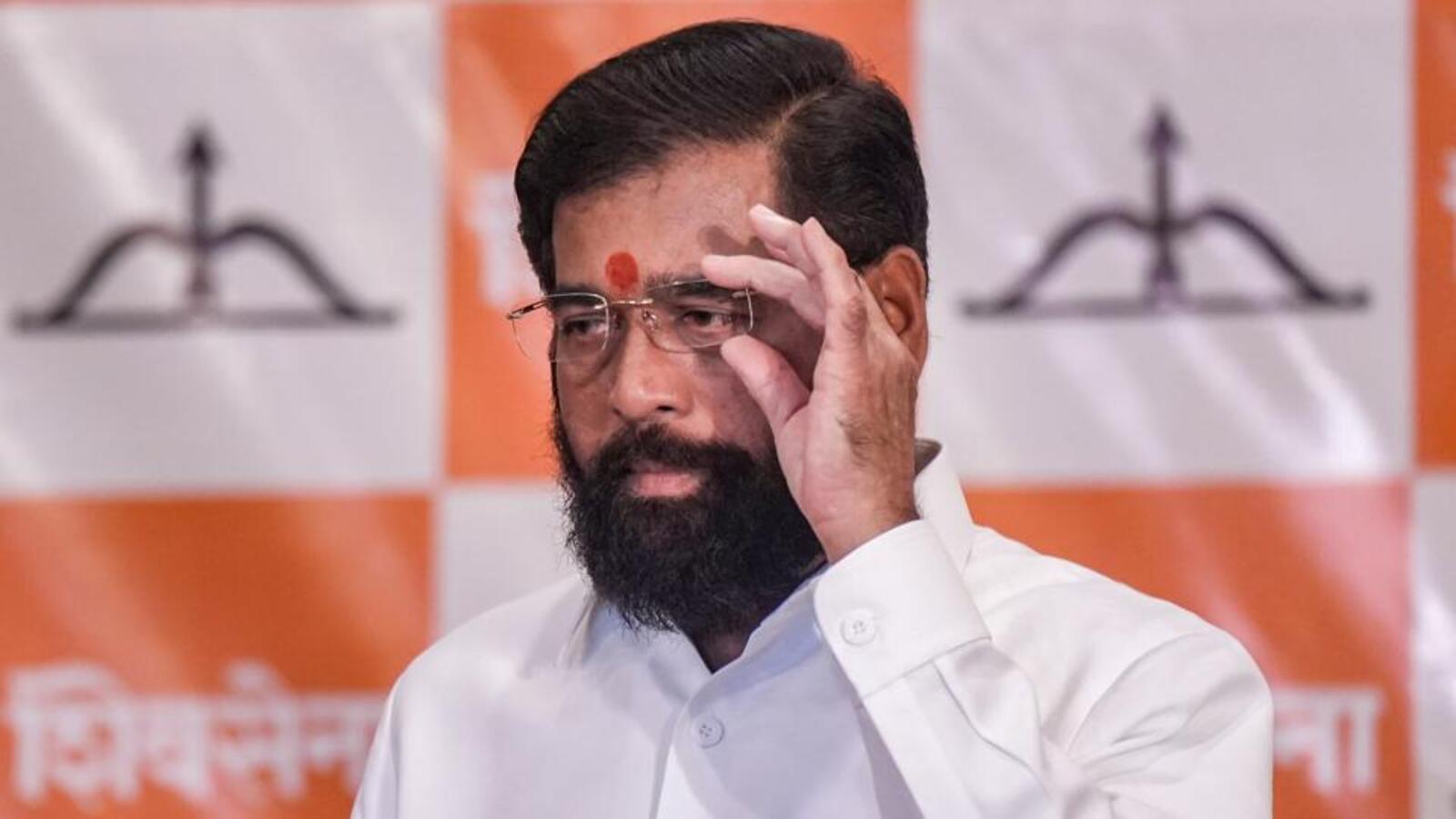
The Shiv Sena Parliamentary Party on Saturday unanimously passed a resolution supporting the Constitutional Amendment and Delimitation Bills, which are expected to be introduced in the special session of Parliament beginning November 30. The resolution was adopted at a meeting of party MPs in Nandanvan, addressed by party chief and deputy chief minister Eknath Shinde.
Shinde asked all 15 party MPs, including 13 from the Lok Sabha, to reach Delhi on Sunday to stand united in support of what he described as a historic step towards strengthening India's democracy and women's representation in legislatures. He expressed confidence that the proposed expansion would give Maharashtra a stronger voice in Parliament and ensure more effective representation of its people. He also emphasised that the proposed delimitation exercise was essential to address the growing imbalance in constituency sizes, with individual MPs currently representing approximately 2 million to 2.5 million citizens in several constituencies.
In April, the government introduced the 131st Constitution Amendment Bill and two other linked legislation to operationalise women's reservation and implement delimitation, but the bill failed to garner the required majority in the face of united Opposition. It was the first time a Constitution amendment bill failed to get the required strength in the Lok Sabha since 2011, when a bill to give the Lokpal constitutional status was defeated. Since then, churn in the Opposition ranks, including rebellion within the Trinamool Congress and Shiv Sena (Uddhav Balasaheb Thackeray), as well as willingness from the Dravida Munnetra Kazhagam and the Nationalist Congress Party (Sharadchandra Pawar), have indicated that the NDA might be more successful this time.
Under the new constitutional amendment bill, the maximum strength of the Lok Sabha will rise to 815 members from states and 35 from Union territories (it is 530 and 20 now, respectively), while the maximum strength of state legislative assemblies will increase to 650. The proposed 50% expansion will apply to the existing allocation of seats in each state and Union Territory, preserving their relative share in the Lok Sabha rather than redistributing representation according to population differences. In application, the number is likely to be between 816 and 824 for the Lok Sabha depending on how half-seats are rounded up.