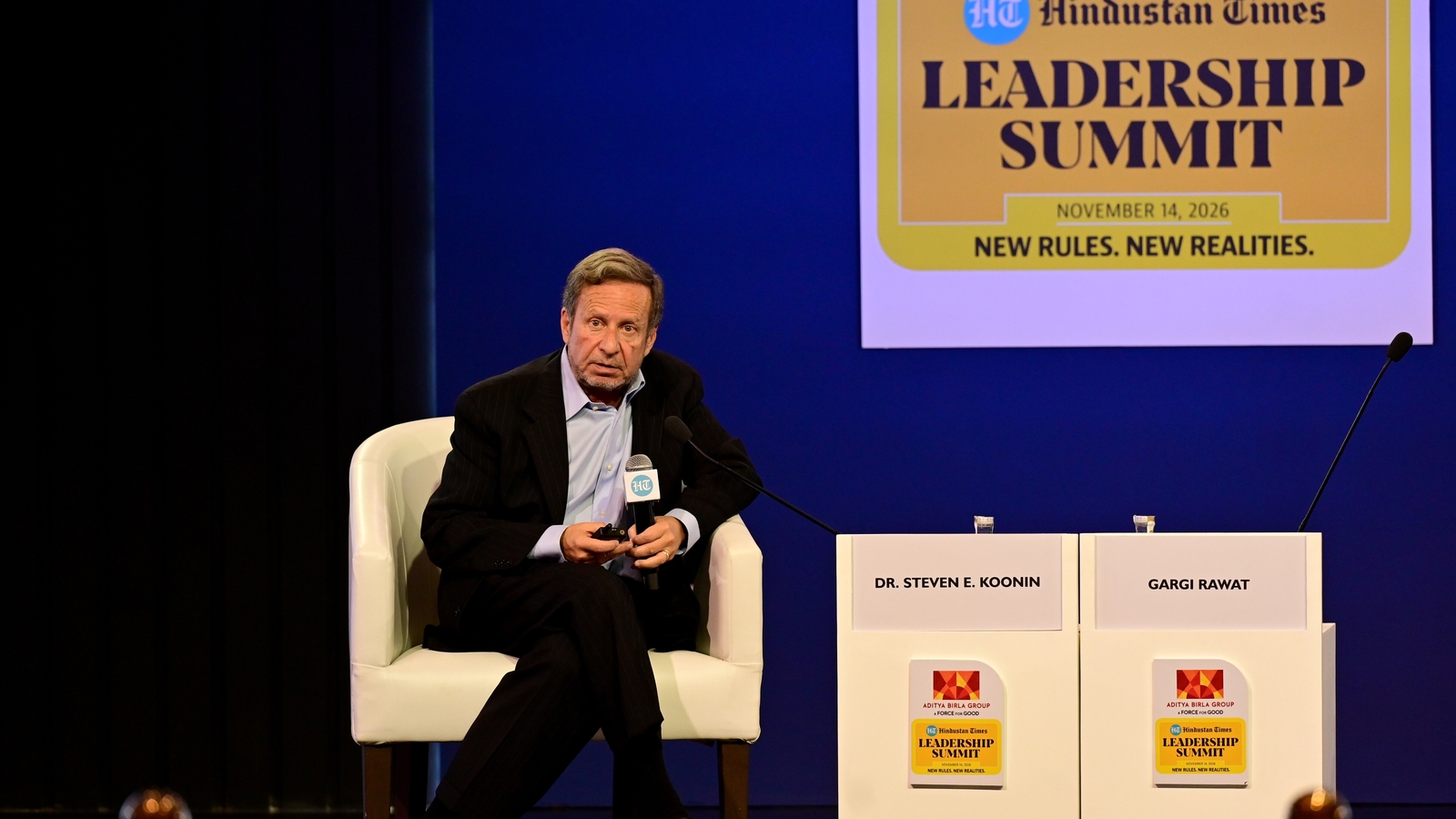
Physicist Steven Koonin said on Saturday that India should secure the energy it needs "in the most convenient way that it can" and focus on decarbonisation only after it becomes richer. Speaking at the 24th Hindustan Times Leadership Summit in a 35-minute conversation with NDTV consulting editor Gargi Rawat, Koonin, a senior fellow at Stanford's Hoover Institution, argued that UN climate conferences had failed to curb emissions or deliver the finance rich countries promised. The session was held while COP31 was under way in Turkey.
Koonin said the energy needs of the developing world were immediate, while the climate threat was "distant, vague and uncertain". Energy must also be reliable and affordable, he said, adding that too much emphasis had been placed on decarbonisation. On the COP conferences, he said global emissions continue to rise and financial promises from the developed world have not materialised. He said development should be India's first priority and that cutting emissions too quickly was disruptive and expensive, citing Germany as an example. He also said nuclear energy must be a big part of India's future.
Pressed on the scientific consensus, Koonin said he did not deny that humans have some impact on the climate, but that the data did not show more storms or faster sea-level rise. He said India had warmed about 0.68°C over the last century, about 2.5 times less than the average over land, and that he saw "no support for a present climate emergency". Asked about this year's flash floods in Nepal, which killed nearly 1,500 people, he said factors such as where people live and whether they have warning systems contributed as much, if not more, than climate change. He declined to say whether Nepal had grounds to seek climate compensation, calling it a complicated moral and diplomatic issue.
Koonin called for a greater focus on adaptation and said geoengineering carried "a lot of downsides" and should be used only in extreme circumstances. Asked about criticism that he cherry-picks data, he said: "If you believe that I'm cherry picking, I often say show me the rest of the fruit salad." Koonin, 74, a theoretical physicist and former chief scientist at BP, argued in his 2021 book, Unsettled, that climate science is far less certain than commonly portrayed.