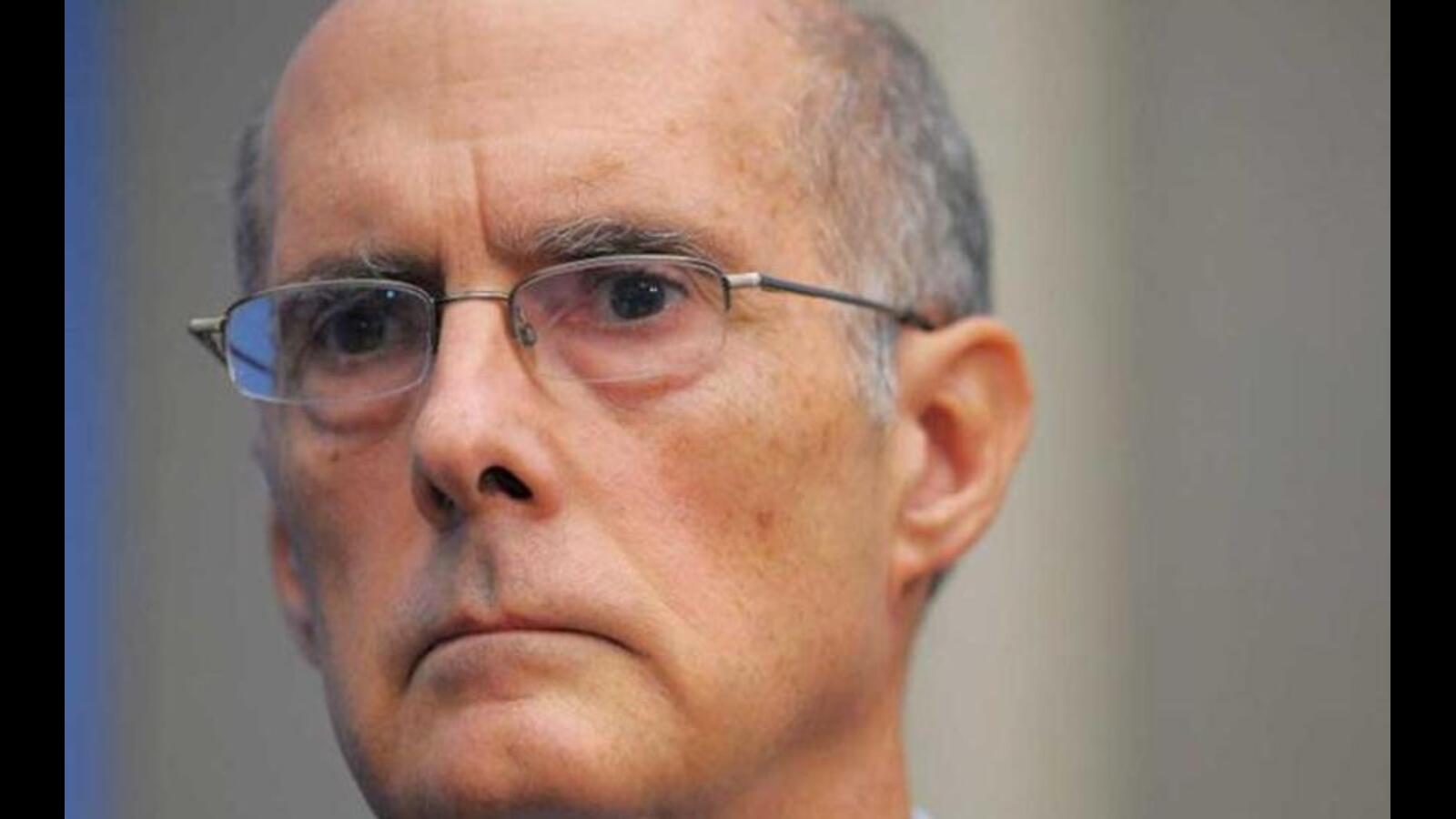
Strobe Talbott, the former US deputy secretary of state widely seen as one of the principal architects of the turnaround in India-US relations after the 1998 Pokhran nuclear tests, died in New York on Friday. He was 80.
Talbott, a product of the postwar American foreign policy establishment with a Yale degree, a Rhodes Scholarship at Oxford and a two-decade career as a foreign affairs correspondent for Time, was a friend of President Bill Clinton from their Oxford days. Clinton brought him into the State Department, where much of his work had focused on the Soviet Union during the Cold War.
After India declared itself a nuclear weapons state in May 1998, a furious Clinton administration imposed sanctions. Talbott then launched a dialogue with external affairs minister Jaswant Singh, meeting him 14 times in 10 locations across seven countries on three continents — what he later described as the most intense and prolonged exchanges ever between American and Indian officials above ambassador level. Washington pressed five benchmarks on India, including signing the CTBT and resuming dialogue with Pakistan, in return for sanctions relief; New Delhi resisted, and the talks were termed a "dialogue" rather than a "negotiation" to avoid the perception of yielding to US pressure.
The process helped bury decades of distrust, and less than two years after the tests Clinton visited India and addressed Parliament, opening a new era in bilateral ties. Talbott recalled that the tests gave Clinton a powerful incentive to make up for lost time on India. Singh praised Talbott's intellectual ability, integrity and ability to see the other person's point of view. In a strict sense, the talks failed amid fierce domestic opposition in India to any compromise with Washington.