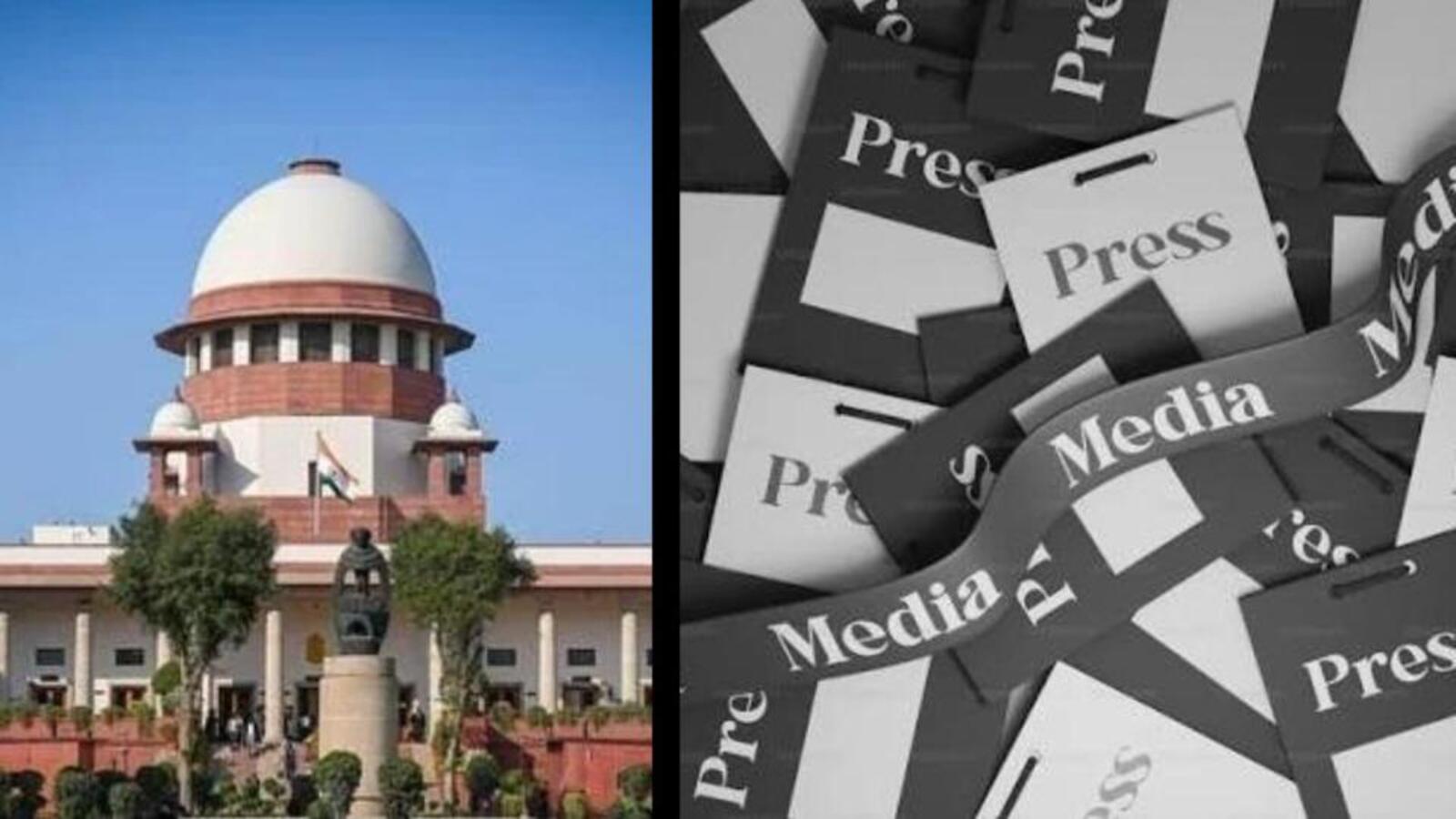
The Supreme Court on Thursday questioned whether individuals who describe themselves as journalists on digital platforms should get the same protection as accredited media professionals, observing that journalist status cannot be self-conferred. A bench headed by Chief Justice of India Surya Kant made the remarks while hearing petitions by journalists and media organisations alleging police excesses during the October protests in Delhi.
The court said the protection available to journalists would depend on their professional credentials and the circumstances in which they sought it. Print journalists can be accredited through the Press Council of India, television journalists through the relevant mechanism, and online journalists can also be registered, it noted, adding that "self-proclaimed journalists" may not have the same protection as accredited ones.
The Delhi Police, in its affidavit, said the evolving digital media landscape had raised questions over whether "reel makers" and "content creators" could be given journalist status. It cited videos in which individuals identifying themselves as media personnel were allegedly seen raising slogans with protesters, suggesting they were not journalists. The court said it would examine larger constitutional questions, including the balance between journalists' right to free movement and the police's duty to maintain law and order.
Senior advocate PV Dinesh, for the Kerala Union of Working Journalists, said the police response did not address alleged excesses against seven media personnel working with established news organisations. The bench directed the union to approach the high-powered enquiry committee headed by former Supreme Court judge Justice (retd) R Subhash Reddy, which can examine whether force was used and whether it was proportionate. The court allowed the union to approach the committee without expressing any view on the merits of its allegations.