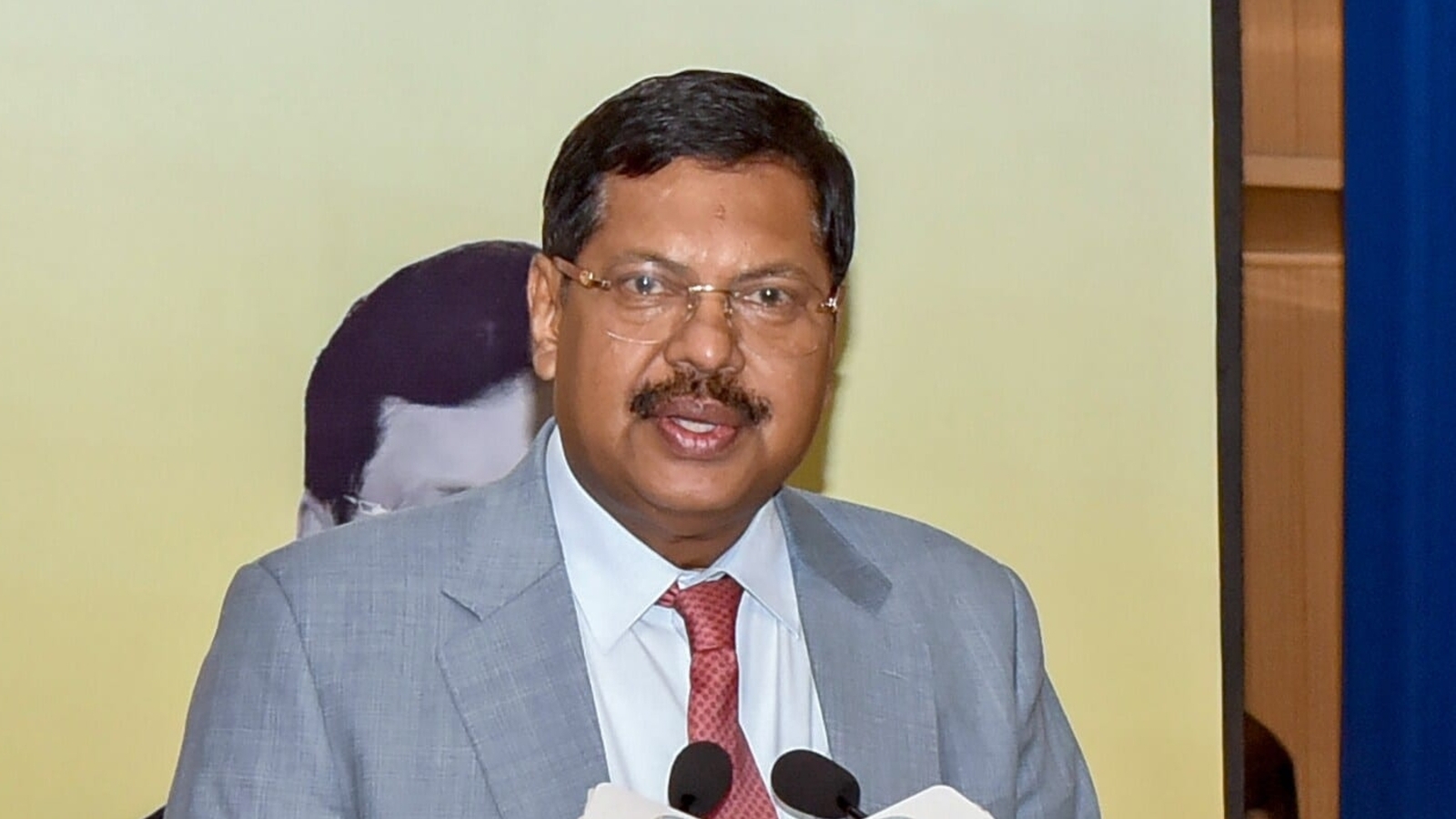
Former Chief Justice of India Bhushan R Gavai has written to President Droupadi Murmu alleging that the Supreme Court collegium is increasingly favouring candidates from "one particular section of the society" for elevation to constitutional courts, to the exclusion of scheduled castes, scheduled tribes, other backward classes, minorities and women. In the letter dated November 27, Gavai, who headed the collegium for nearly six months before demitting office in November 2025, alleged that recent recommendations reflected a disregard for merit, diversity and inclusivity and appeared driven by an effort to "appease and reward a single community". He urged the President to intervene so that all stakeholders discharge their constitutional responsibility of securing adequate representation in the higher judiciary.
Although the former CJI did not name the community, his reference to a group accounting for less than 5% of India's population having secured more than 40% representation in the Supreme Court, with its share rising "manifold in the recent past", appeared to point to Brahmins; people aware of the matter confirmed this, according to the report. He wrote that the historical pattern of disproportionate representation had persisted for decades without meaningful correction. The collegium currently comprises CJI Surya Kant and justices Vikram Nath, BV Nagarathna, MM Sundresh and PS Narasimha.
Gavai said he had consistently followed the principles of diversity and inclusion while recommending candidates for the high courts and the Supreme Court, seeking to balance representation from forward communities with that of marginalised sections. Citing the Union law minister's reply in the Rajya Sabha in March 2025, he said that of the 715 high court judges appointed since 2018, only 22 belonged to the SCs, 16 to the STs, 89 to the OBCs and 37 to minority communities, with roughly three-fourths from the general category. He also cited figures for January 2021 to January 2026, arguing that the share of forward communities was close to 80% while OBCs received less than 14% representation, and noted that caste-wise data was not maintained for Supreme Court appointments.
According to the report, the collegium during Gavai's tenure published details of its high court recommendations, including candidates' social background; between May 14 and November 23, 2025, it recommended 129 names, of which 93 were cleared by the government, including 10 from the Scheduled Caste community, 11 from OBC and backward classes, 13 from minority communities and 15 women. He also flagged alleged questionable decisions in the transfer and elevation of high court chief justices, referring without naming them to a chief justice transferred successively to smaller high courts who is now being recommended to head a prominent high court, allegedly because of belonging to the particular community, while a "meritorious and hard-working" chief justice was transferred to a smaller high court to make way for him.