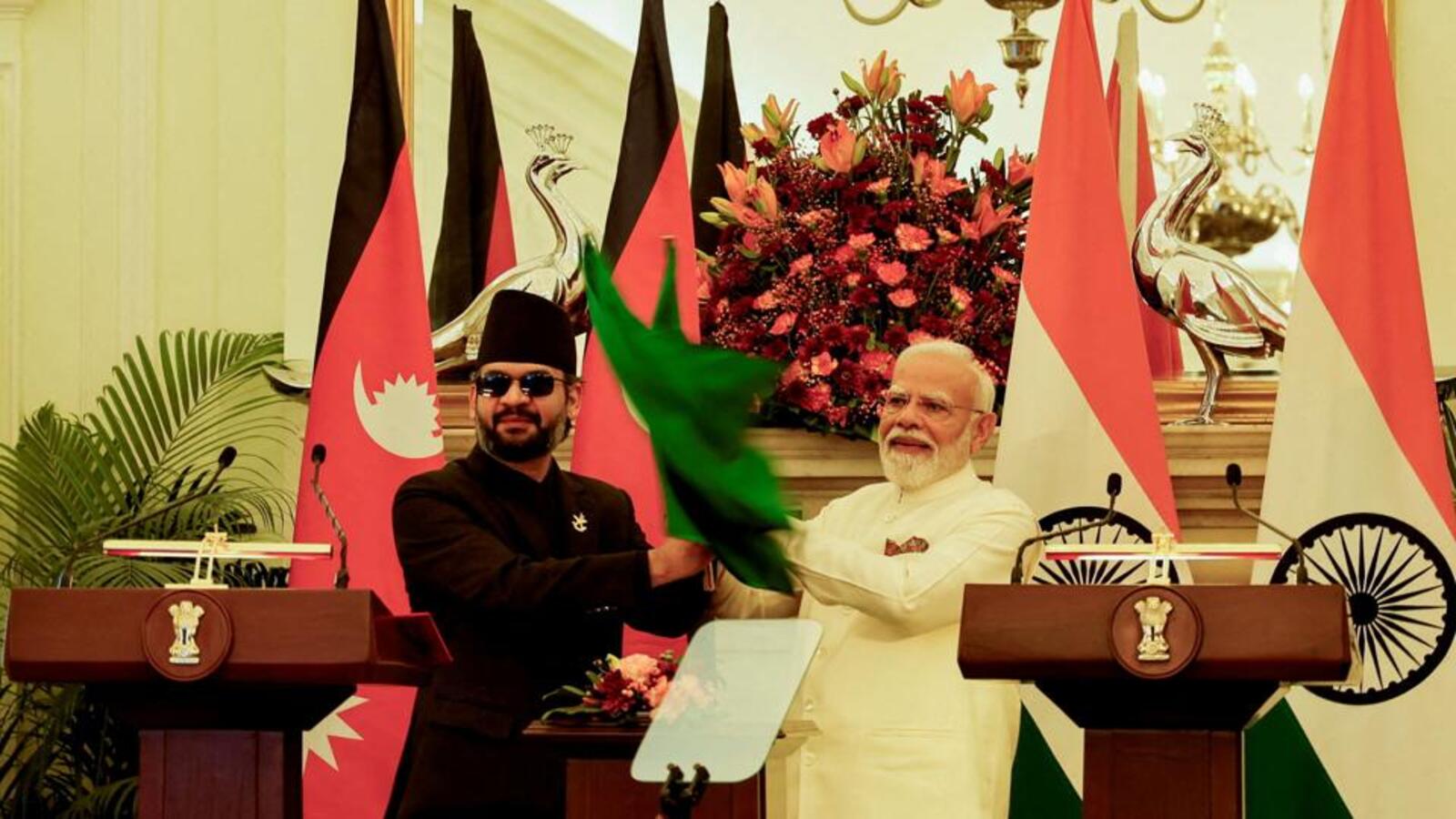
India on Monday announced a $1.6-billion (Nepali ₹24,000 crore) economic development package for Nepal and a set of cross-border connectivity, energy and trade initiatives, as Prime Minister Narendra Modi and his Nepalese counterpart Balendra Shah unveiled a new joint vision to reset long-standing ties. Shah, 36, who came to power in elections held earlier this year following a Gen Z uprising in 2025, was on his first bilateral foreign visit, arriving in India on Sunday. After a ceremonial welcome at Rashtrapati Bhavan on Monday morning, the two leaders held talks covering Nepal's economy and reconstruction efforts following the August flash floods.
Modi said the development cooperation package would strengthen Nepal's reconstruction and long-term development following the Bhote Koshi flash floods. The announcement is significant as Nepal had proposed a $2-billion package, half of it in grants, ahead of Shah's visit. Modi acknowledged the political changes in Nepal, which swept away traditional parties, and the mandate given to Shah reflecting the aspirations of the new generation. Shah described bilateral ties as "as firm as the Himalayas and as vast as the ocean" and said the outcomes of his visit must translate into opportunities for Nepal's youth, new markets and business expansion for entrepreneurs.
The two sides virtually flagged off the weekly Saryu-Kamala Express cross-border train linking Ayodhya in India and Janakpur in Nepal. They inaugurated a bridge over the Mahakali river linking Uttarakhand with Nepal and laid the foundation stone for an integrated check post at Banbasa. Modi said work on the Dodhara-Chandni ICP on the Nepal side would be expedited, and that Nepal would be given access to the Kandla and Paradip ports to facilitate transit trade. The foundation stone for the 669-MW Lower Arun hydroelectric project was laid, and Phase II of the Motihari-Amlekhganj pipeline was inaugurated alongside the foundation stone for the Jhapa petroleum terminal.
Modi said India would establish a start-up incubator, an innovation hub and an offshore campus of the Indian Institute of Technology in Nepal, and expand scholarship opportunities in law and technology for Nepali students. Both leaders emphasised the joint vision document, themed "developed India and prosperous Nepal", as a blueprint for a shared future. Shah said his talks with Modi were guided by the goal of strengthening and modernising the historical relationship, and acknowledged India as a dependable neighbour that has consistently stood as a first responder in times of natural disasters.