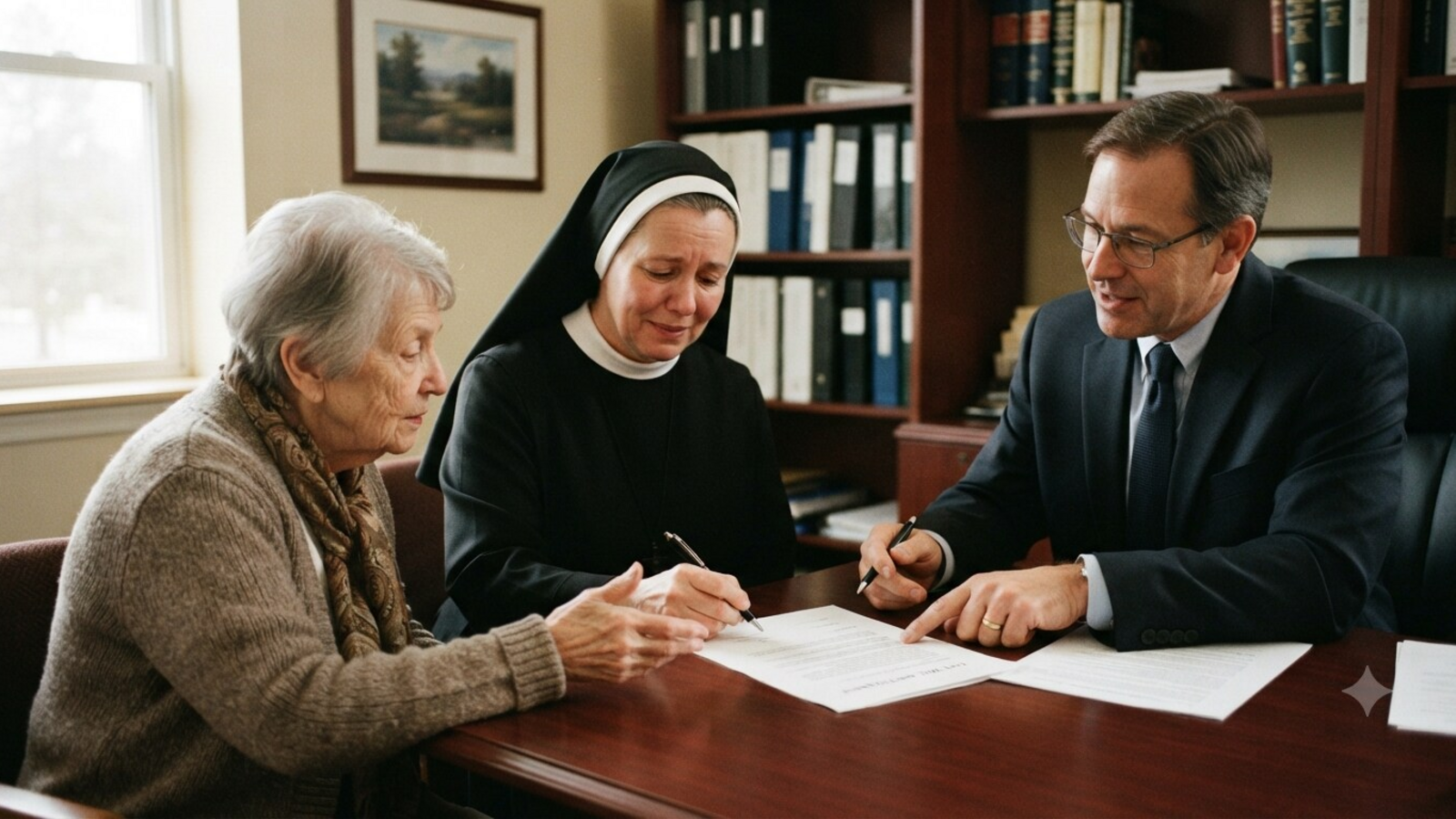
The Kerala High Court has ruled that a woman does not lose her right to inherit family property under the Indian Succession Act merely by joining a religious order. The ruling came in a dispute over compensation for 3.295 acres of land in Muthappanpuzha, Kozhikode, acquired by the government.
On Friday, the court rejected a plea by Jose AM, 66, to exclude his sister, a nun, from a share of the compensation. He had argued that by entering monastic life she had undergone "civil death" and forfeited her inheritance rights. The compensation of ₹3,74,34,449 had been ordered to be divided equally among the six children of the original owner by the Land Acquisition Rehabilitation and Resettlement Authority (Additional District Court-IV), Kozhikode.
Referring to a 2017 division bench ruling in Msgr Xavier Chullikkal and Others v. C G Raphel and Others, the court reiterated that joining a religious order does not automatically strip a person of inheritance rights. It observed that entering a religious order and renouncing worldly pleasures would not automatically result in deprivation of property acquired by intestate or testamentary succession. The judge also cited the Supreme Court's 1997 ruling in Molly Joseph v. George Sebastian, which held that statutory provisions take precedence over personal laws, customary practices and traditions.
Jose also contended that his other siblings should not get a share of the solatium as they had moved out of the family home, and that his role in managing the jointly owned land entitled him to the entire amount. The court rejected both claims. It also held that a settlement agreement under which one brother had allegedly given up his share could not be enforced as it was unregistered. Jose has filed an appeal, which is scheduled for admission before a division bench of Justices Devan Ramachandran and Basant Balaji on Monday.