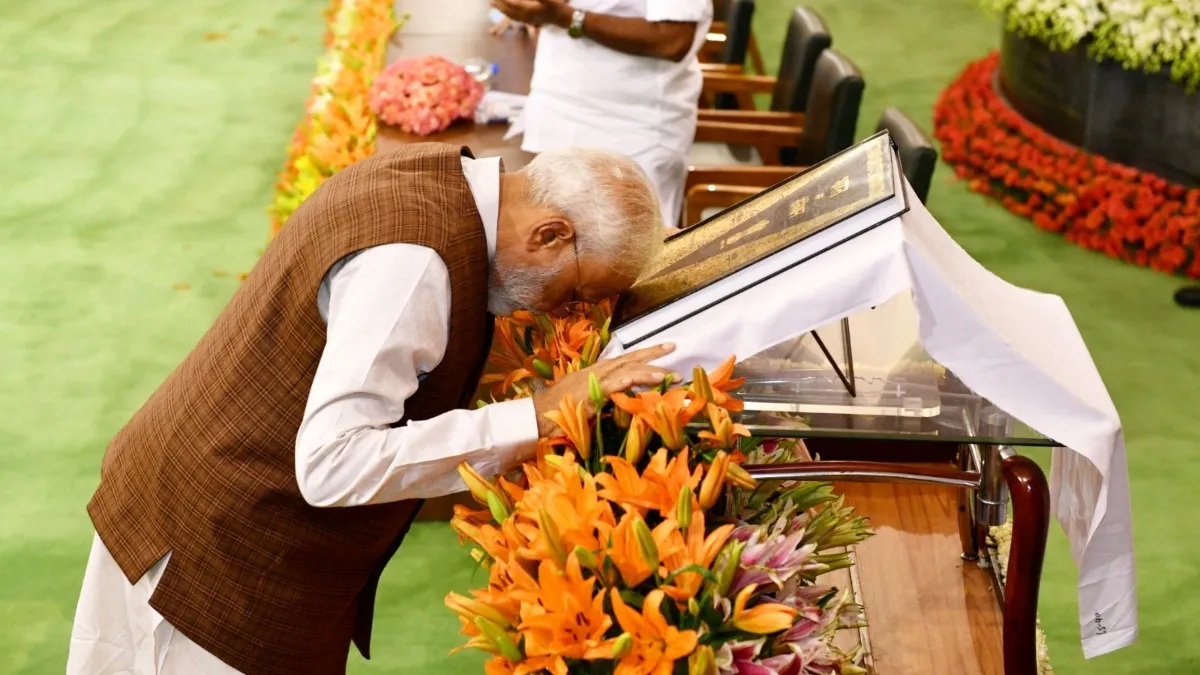
Prime Minister Narendra Modi paid tribute to Dr BR Ambedkar and Constituent Assembly members on Constitution Day, November 26, describing the Constitution as the guiding force behind India's democratic journey. In an article published for the occasion, he said the document should not remain confined to Parliament and the judiciary but become part of citizens' lives, and recalled his government's decision over a decade ago to designate November 26 as Constitution Day to strengthen public awareness, especially among the young.
The Prime Minister raised several politically significant issues, targeting previous governments over the Emergency, constitutional amendments, the dismissal of elected state governments and the erstwhile special status of Jammu and Kashmir. Referring to the First Constitutional Amendment of 1951, he alleged that a government without a direct electoral mandate used its majority in the Provisional Parliament to restrict fundamental freedoms, and questioned its timing months before India's first general election. He also argued that the 42nd Amendment during the Emergency curtailed judicial review and altered the balance of institutional powers, and urged youngsters to study the 38th and 39th Amendments.
PM Modi also accused the Opposition of obstructing legislation intended to ensure adequate representation for women in legislative bodies, writing, "I assure the Nari Shakti of India that no force can prevent us from ensuring that justice is done to them." His article also touched upon reservation, the responsibilities of the Opposition and India's ambition of becoming a developed nation by 2047. He said the Constitution reflected India's civilisational heritage while establishing the institutional framework of a modern democracy.