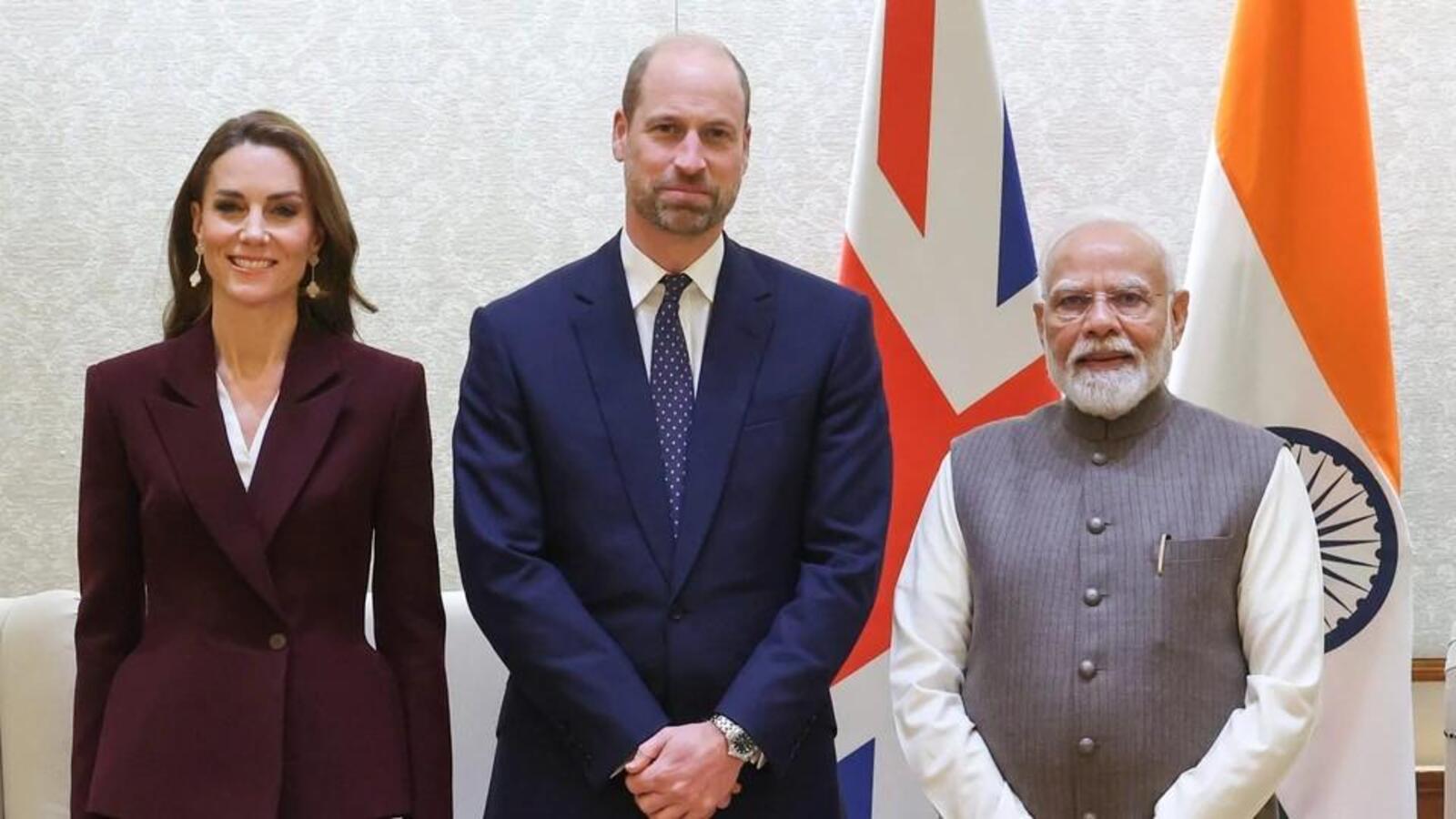
Britain's Prince William and the Royal Foundation's United for Wildlife on Friday announced a five-year personal accident insurance programme covering 10,000 temporary wildlife rangers across seven Indian states, offering financial protection to them and their families in case of death or serious injury on duty. The programme will take effect in December 2026 and cover temporary rangers in Madhya Pradesh, Karnataka, Assam, Uttarakhand, Maharashtra, Kerala and Rajasthan. It is among the largest dedicated insurance programmes for wildlife rangers in Asia.
Temporary forest watchers, many employed on a daily-wage basis, are generally not covered by government insurance schemes, unlike permanent forest staff. They carry out anti-poaching patrols, monitor wildlife and respond to human-wildlife conflict, often working in remote forests and difficult conditions. The announcement follows Prince William's three-day visit to India from November 16 to 18, which included Mumbai hosting the Earthshot Prize.
In a statement, Prince William said India's wildlife rangers stand on the front line of protecting precious wildlife day and night, patrolling remote forests, enduring difficult conditions and facing significant dangers to safeguard nature for future generations. United for Wildlife said that if a temporary ranger is injured or killed on duty, their family can be left with no income and no compensation.
The programme has been designed by K.M. Dastur & Company (KMD) and will be implemented by the Wildlife Trust of India and WWF-India, with ValuEarth Conservation. The International Big Cat Alliance (IBCA) will coordinate efforts in India, and the programme has been designed with the International Ranger Federation. Tom Clements, executive director of United for Wildlife, said one cannot protect wildlife and wild places without protecting the people who protect them, adding that the initiative demonstrates what can be achieved when conservation, government and industry partners unite. Similar packages were announced in Rio last year and in Cape Town the year before; since launching in Africa, the programme has provided insurance cover and welfare support to just over 7,000 rangers and their families.