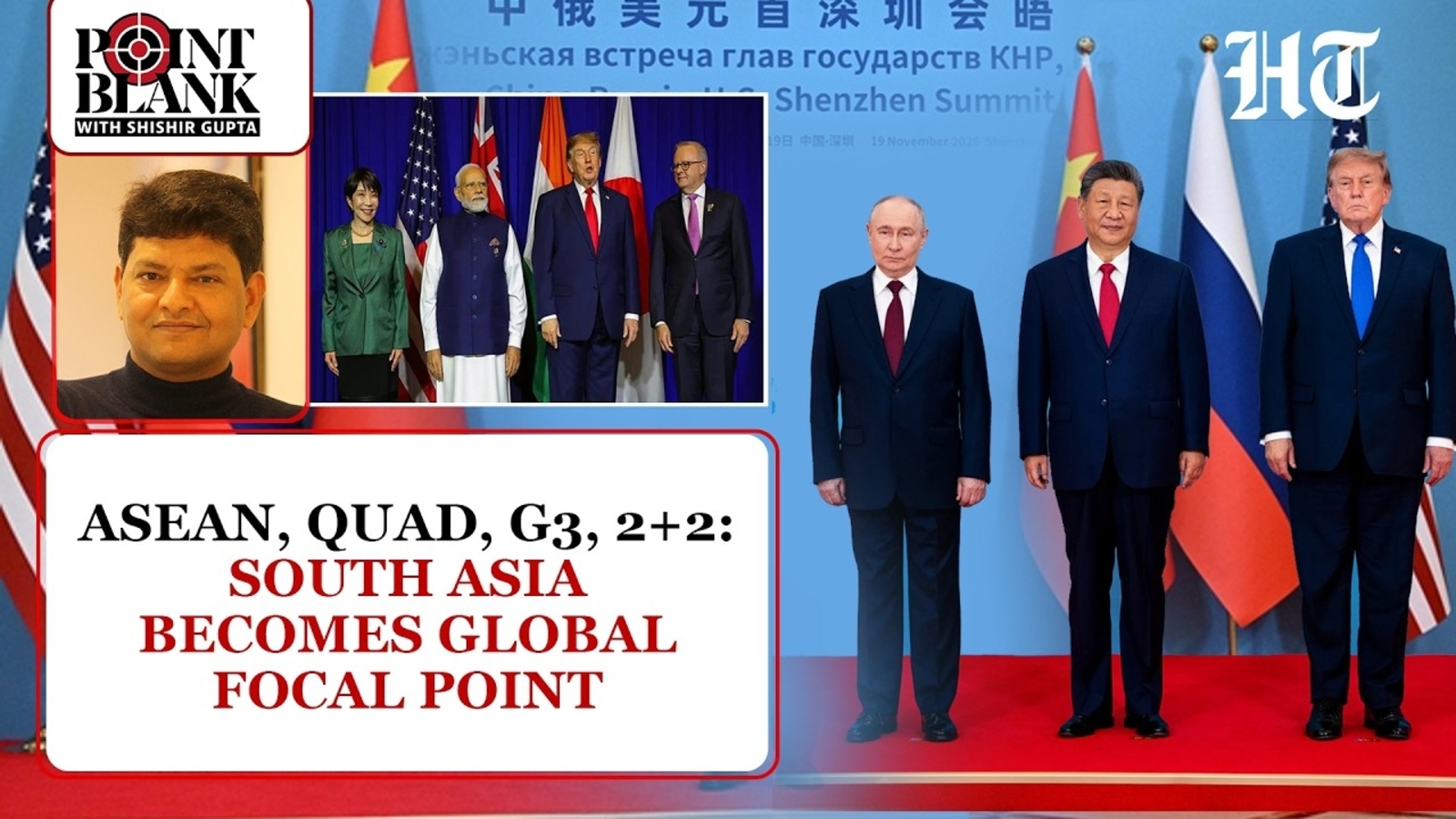
A busy diplomatic calendar may suggest a shifting world order, but Hindustan Times Executive Editor Shishir Gupta told Senior Anchor Aayesha Varma on Point Blank that summits should be judged by what follows them: eased tensions, operational agreements and greater room for countries to protect their interests. He drew a line between diplomatic spectacle and strategic substance, offering grounds for cautious optimism alongside a warning that dialogue alone cannot settle competing ambitions.
On ASEAN, Gupta said Southeast Asian states want enough peace and stability to keep their economies growing, engaging China, India and the United States to preserve commerce rather than to pick sides. China's expanding footprint is reportedly creating friction with the Philippines, Indonesia and Japan, which are hedging by strengthening ties with other powers. He argued a durable equilibrium will remain difficult unless China moderates its behaviour, and cited Japan's position linking a Taiwan contingency to its own security as evidence that regional flashpoints cannot be treated in isolation.
Gupta rejected the view that the Shenzhen trilateral involving the United States, Russia and China was only talk, while cautioning against calling it a breakthrough before its understandings face practical tests. He identified the UN's future direction, oil-market stability, nuclear restraint and the treatment of state officials by international judicial institutions as significant areas, reading the UN discussion as an effort to influence the organisation's leadership and agenda rather than as an opening for expanded representation. He said the meeting's value depends on implementation, with tests including responses to an escalation involving Iran, whether engagement could help end the Ukraine war, and how European countries would respond to arrangements affecting their interests.
On the Quad, Gupta highlighted a proposed business forum and maritime surveillance aircraft cooperation. He said the first forum meeting is expected in Mumbai the following year, giving the grouping an economic dimension, while exercises involving American-origin patrol aircraft, including India's P-8I, aim to improve interoperability and build a clearer shared picture at sea. On the India-Japan 2+2 dialogue, he pointed to missile testing at India's Pokhran ranges as a potentially significant area of cooperation, with his broader argument concerning Japan's strategic choices.