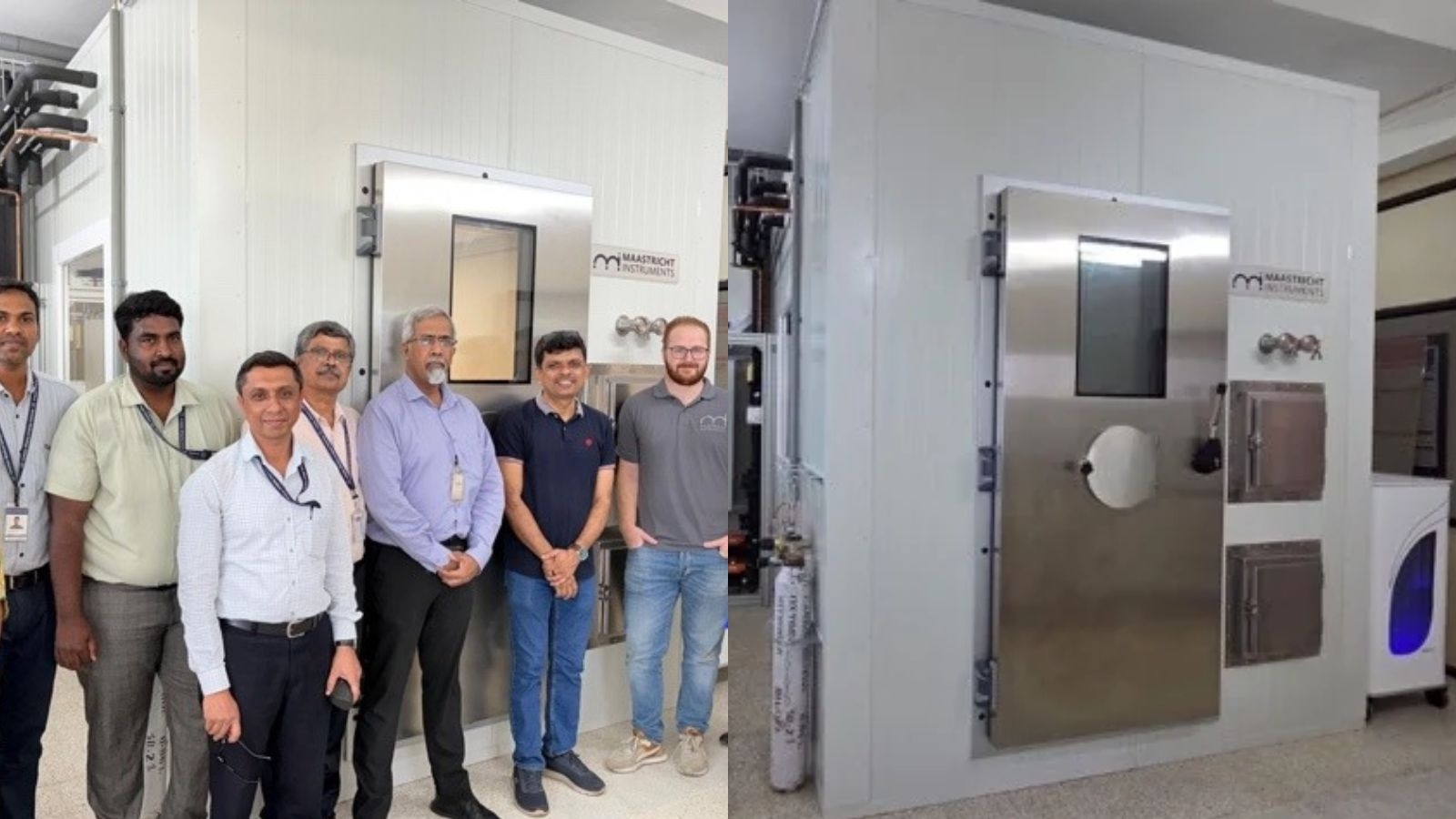
The Christian Medical College (CMC) in Vellore on Monday unveiled India's first Human Metabolic Chamber, a facility jointly established with the Metabolism, Development and Aging (ARUMDA) programme of the Tata Institute of Fundamental Research (TIFR). Union health ministry secretary Punya Salila Srivastava inaugurated the chamber, where volunteers will live for 24-hour periods while scientists monitor their meals, movement, sleep and rest. Meals will be delivered through an airlock as participants carry out routine activities such as working, resting, eating and sleeping.
Researchers will measure oxygen consumption and carbon dioxide output to calculate energy burned during sleep, rest, digestion and physical activity, and to track how the body switches between using fat and carbohydrate. While most metabolic tests capture a snapshot of 20 to 30 minutes, often through a face mask, the chamber follows a person through a full daily cycle. Dr Nihal Thomas, senior professor in CMC Vellore's department of endocrinology, said a full 24-hour measurement captures how the body switches fuels through feeding and fasting and follows its circadian rhythm, patterns that brief tests cannot measure and that are often disrupted early in obesity and diabetes.
Ullas Kolthur-Seetharam, coordinator and principal investigator of ARUMDA, said multiple forms of the double burden of malnutrition exist within communities, households and even individuals in low and middle-income countries, leading to higher risk of obesity, diabetes and other noncommunicable diseases. He noted that the Indian population is under-represented in global metabolic research, and said the chamber will help address questions about how the body uses energy and how this varies across India's diverse populations, diets and lifestyles.
The facility is expected to support long-term studies, including a Vellore birth cohort that CMC has followed since 2010–12. A joint ARUMDA–CMC study of that cohort, published in 2026 in The Lancet Regional Health – Southeast Asia, showed overweight and obesity nearly tripling between the ages of seven and nine, while about one in five children remained thin. The chamber was established with funding from the department of atomic energy and CSR support from Hindustan Unilever Limited, with expert advice from NUTRIM at Maastricht University and network support from the Embassy of the Kingdom of Netherlands in India. The cost of building the chamber was not divulged.