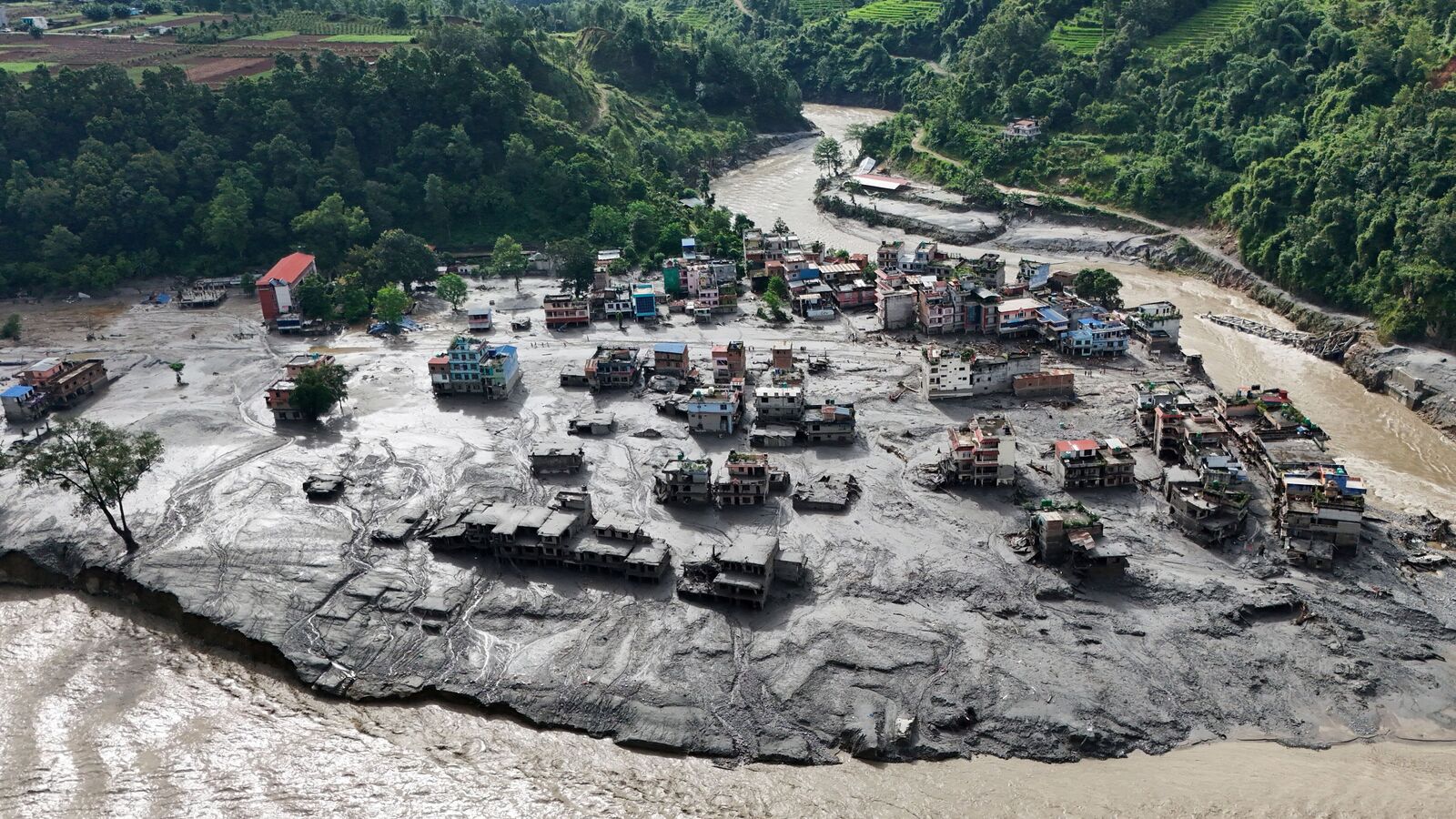
Prime Minister Narendra Modi on Monday announced a ₹15,000-crore development package for Nepal during Nepalese Prime Minister Balendra Shah's maiden visit to India since taking office in March. The announcement came three months after a flash flood battered the Himalayan nation. The two leaders agreed to deepen cooperation in trade, energy, infrastructure and technology as Shah wrapped up his two-day visit, during which he also met President Droupadi Murmu. According to a joint press statement, the bilateral talks covered the full range of India-Nepal relations as well as regional and international issues of mutual interest.
The development package is aimed at supporting Nepal's reconstruction after the August floods, strengthening its long-term development and improving its capacity to handle future disasters. Modi said India has always been a partner in the development journey of a strong and prosperous Nepal, adding that the two countries had taken several important decisions to raise their relationship to new heights. The visit came amid growing economic engagement, with bilateral goods trade reaching $9.38 billion in FY26, up 8.24% over FY25. India accounts for more than 60% of Nepal's external goods trade and remains its largest trading partner and export destination.
Connectivity emerged as a key area of cooperation. The two leaders inaugurated the Dharchula road bridge between Uttarakhand and Nepal and laid the foundation stone for an integrated check post at Banbasa, while work on the Dodhara-Chandani integrated check post in Nepal will be expedited. Road, rail and border connectivity projects linking Nepal with Bihar, Uttar Pradesh and other Indian states will be accelerated, and India will provide Nepal access to Kandla and Paradip ports for transit trade. Modi also laid the foundation stone for the Lower Arun Hydroelectric Project and reiterated India's commitment to completing the Arun-3 project on schedule, and inaugurated Phase II of the Motihari-Amlekhgunj petroleum pipeline along with the foundation stone for a petroleum terminal at Jhapa.
In education and technology, India will support a start-up incubator, an innovation hub and an offshore campus of the Indian Institute of Technology in Nepal, with scholarships for Nepali students in law and technology set to expand. The two countries will collaborate on an agro-industrial park for food processing and value addition, and cooperation will extend to sports infrastructure and training, particularly cricket. Modi and Shah jointly flagged off a new train service, the Saryu-Kamala Express, to improve connectivity.